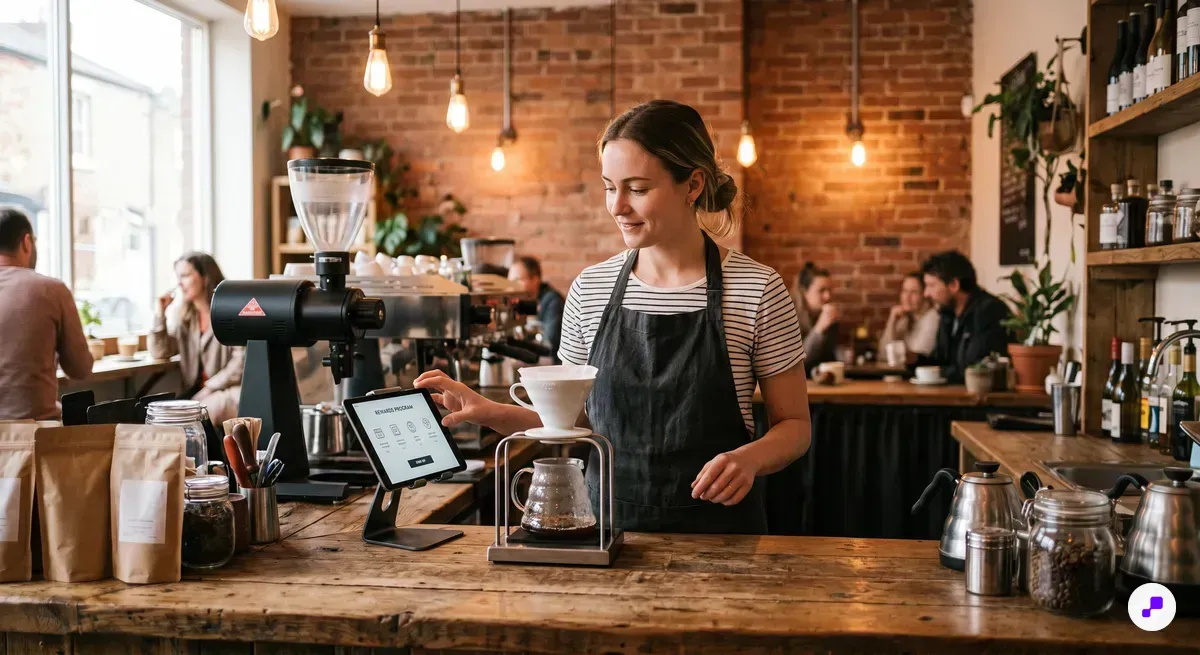
The paper punch card has been a coffee shop staple for decades, and for good reason — it's simple. But simplicity comes at a cost. Punch cards get lost, damaged, or left at home. There's no data collected on who your loyal customers actually are, what they order, or how often they visit. And the worst part: they train customers to order the cheapest qualifying drink to earn their free one faster.
Digital loyalty programs solve these problems, but only if they're designed for the rhythm of coffee buying. A program that requires customers to open an app, scan a code, and wait for confirmation adds 30 seconds to a transaction that should take 90 seconds total. In a morning rush with a line out the door, that friction is a dealbreaker.
The best coffee loyalty programs are invisible. The customer taps their phone, the points appear, and the barista keeps the line moving. No app to open, no code to scan, no login to remember. That's why wallet-based programs see participation rates of 70% or higher, compared to 20-30% for app-based alternatives. For more ideas on structuring your rewards, check out our coffee shop loyalty program ideas guide.
Another common mistake is treating every drink the same. A $2.50 drip coffee and a $7 specialty pour-over shouldn't earn the same reward. Your loyalty program should encourage customers to explore your premium offerings — that's where your margins are. Dollar-based earning (1 point per dollar spent) naturally incentivizes higher-ticket orders without penalizing your everyday drip customers.
Paper punch cards lose data, encourage low-ticket ordering, and can't personalize the experience — digital programs fix all three.
Count how many paper punch cards you hand out per month versus how many get redeemed. That gap is the participation you're losing to friction.
Shopify POS tracks every transaction digitally, giving you the purchase data that paper punch cards can never capture.
Digital wallet passes replace paper punch cards with a tap — no app download, no lost cards, and automatic point tracking on every purchase.
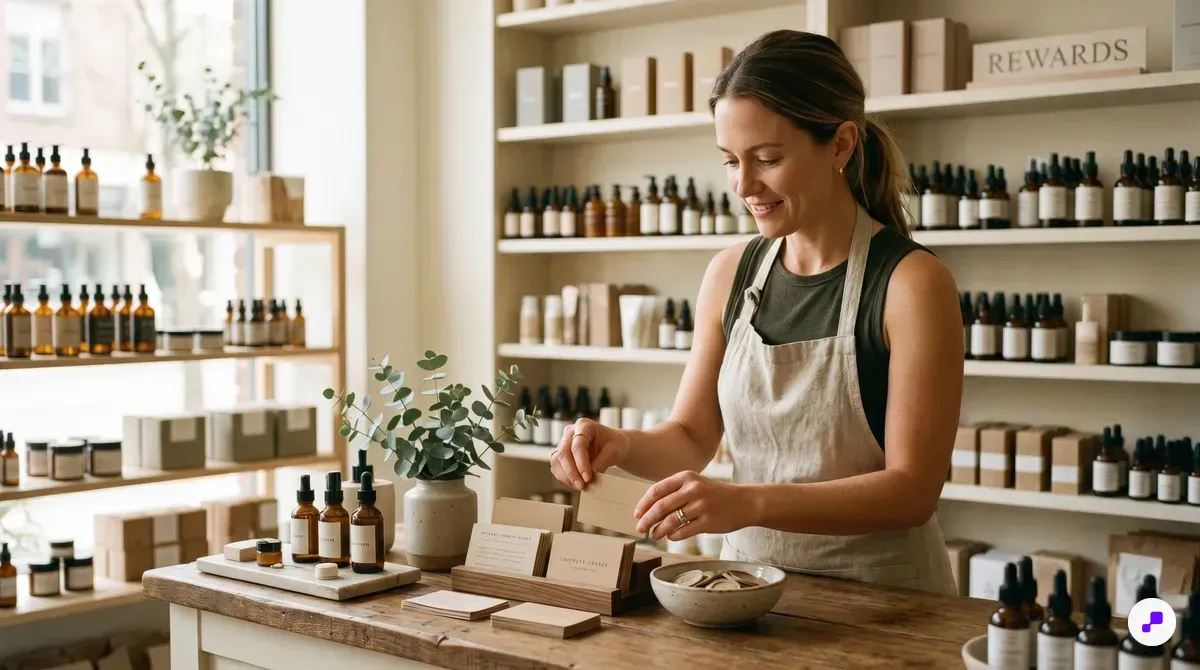
Coffee customers buy frequently — many visit daily — so your points structure needs to deliver rewards fast enough to feel attainable but not so fast that you're giving away margin on every transaction. The sweet spot for most coffee shops is a reward cycle of 8-12 visits.
Start with a dollar-based earning model: 1 point per dollar spent. This naturally rewards customers who order specialty drinks, food pairings, or bags of beans alongside their daily cup. A customer spending $5 per visit earns their first reward (a free drink worth 50 points) after 10 visits. That's about two weeks for a daily customer — frequent enough to feel achievable.
Add bonus point opportunities that shape the behavior you want. Double points before 8 AM fills your early morning slot. Triple points on new seasonal drinks drives trial. A weekend warrior bonus (extra 5 points on Saturday and Sunday visits) brings in customers during slower periods. These multipliers keep the program feeling dynamic without changing the base earning rate.
For tea-focused businesses, consider a discovery bonus. Award 10 extra points the first time a customer tries each tea variety on your menu. This turns your loyalty program into a guided tasting journey and exposes customers to higher-margin specialty teas they might not have ordered otherwise. You can pair this with a tasting card on their wallet pass that shows which varieties they've tried.
Set points to expire after 6 months with a 30-day warning notification. Coffee customers are creatures of habit, so a 6-month window is generous — if someone hasn't visited in half a year, they've likely found a new shop. The expiration notification itself often triggers a win-back visit. For tips on structuring your tiers, see our coffee shop VIP tiers breakdown.
Dollar-based earning rewards premium purchases naturally, and a 10-visit reward cycle hits the sweet spot for daily coffee buyers.
Calculate your average ticket size and set your first reward tier so that it's reachable in roughly 10 visits — that's the engagement threshold where habit locks in.
Shopify POS captures the exact dollar amount per transaction, enabling dollar-based points accrual without any manual tracking by baristas.
The wallet pass updates the points balance after every tap, so customers see their progress toward the next free drink without opening any app.
The most redeemed reward at any coffee loyalty program is a free drink — but if that's your only reward, you're leaving money on the table. The best programs layer multiple reward types that serve different customer motivations and drive incremental revenue.
Free drink rewards are your baseline. Offer them at the entry-level tier (50 points or roughly 10 visits) because that's what customers expect from a coffee loyalty program. But make the free drink any drink up to a certain value — if a customer earns their reward by buying lattes, let them redeem it for a latte, not just a small drip. Restrictive redemption feels punishing and damages trust.
Upgrade rewards are margin-friendly and surprisingly effective. A free extra shot, a size upgrade, or a premium milk substitution (oat, almond) at no charge costs you pennies but feels valuable to the customer. These work especially well as surprise rewards: "Congratulations, your next size upgrade is on us!" triggered by a wallet push notification.
Retail and merchandise rewards drive a revenue stream most coffee shops underutilize. A free bag of beans (at 150 points) gets customers brewing your coffee at home — extending your brand beyond the shop. A branded mug or tumbler (at 200 points) turns customers into walking advertisements. These higher-tier rewards give people something aspirational to work toward.
Exclusive access rewards create emotional loyalty that discounts never can. Early access to seasonal blends, invitations to cupping events, or a "barista's choice" monthly selection reserved for loyalty members makes customers feel like insiders. For a complete list of reward strategies, explore our best rewards for coffee and tea shops.
Subscription tie-ins are particularly powerful for coffee. Offer loyalty members a 10% discount on their first coffee subscription, or award double points on subscription orders. This converts transactional buyers into recurring revenue — the holy grail for any coffee business.
Layer free drinks, upgrades, merchandise, and exclusive access to serve different customer motivations and maximize lifetime value.
Add one upgrade reward (free extra shot or size upgrade) to your program this week — it costs almost nothing but creates a moment of delight.
Use Shopify's product catalog to create reward redemption products (free drink, merch, beans) that integrate directly with your POS checkout flow.
If you're already running your coffee shop or tea business on Shopify — whether that's in-store POS, online bean sales, or both — adding a loyalty program takes less than a day. The infrastructure is already there; you just need to connect the dots.
Start by choosing a loyalty app that integrates natively with Shopify POS. You need an app that handles both in-store tap transactions and online orders within a single customer profile. When a regular buys a latte at the counter in the morning and then orders a bag of beans online that evening, both purchases should earn points under the same account.
Configure your earning rules in the app: points per dollar spent, bonus multipliers for specific products or time windows, and any referral bonuses. Then set up your reward catalog — free drinks, upgrades, merchandise — as redeemable items that your baristas can apply at checkout with one tap.
The critical step most shops skip is training their baristas. Your team needs a 60-second pitch: "Would you like to join our rewards program? You'll earn points on every purchase and get a free drink after about 10 visits. I can set it up right now — just takes a few seconds." Barista enrollment is the number one driver of participation because it happens at the natural point of interaction.
For online orders, add a loyalty widget to your Shopify storefront that shows logged-in customers their points balance and available rewards. This drives online bean and merchandise sales from customers who might only think of you as their morning coffee stop. The cross-channel visibility turns single-channel customers into multi-channel loyalists.
Automate your post-purchase engagement with Shopify Flow. Set up triggers for milestone celebrations ("You just earned your 100th point!"), reward availability alerts ("You have a free drink waiting"), and win-back nudges ("We miss you — here's double points on your next visit"). These automations run in the background while your team focuses on making great coffee.
Shopify POS unifies in-store and online loyalty tracking so every customer interaction earns points in one profile.
Write a 60-second barista enrollment script today and role-play it with your team during the next shift meeting.
Shopify POS handles in-store transactions while Shopify Flow automates loyalty triggers like milestone notifications, reward alerts, and win-back campaigns.
Wallet passes connect to Shopify POS via NFC — one tap at the counter handles identification and point earning without slowing the morning rush.
Digital wallet passes are the natural evolution of the coffee punch card. They live in Apple Wallet or Google Wallet — apps your customers already have — and they deliver everything a punch card does, plus data, automation, and real-time communication.
The setup is straightforward. Design a pass template with your shop's branding: logo, colors, and a clean layout showing the customer's name, points balance, and current tier. Add a barcode or NFC trigger that your Shopify POS can read at checkout. Distribute the pass via a text link, email, or QR code at the register. Most customers add it in under 10 seconds.
Once the pass is in their wallet, every interaction becomes effortless. The customer taps their phone at checkout, points are awarded automatically, and the pass updates to show the new balance. No app to open, no login screen, no waiting. During a morning rush when you're serving 100 customers per hour, that speed matters.
The real power of wallet passes is the push notification channel. When a customer earns enough points for a free drink, a notification pops up on their lock screen: "Your free latte is ready — tap to redeem at your next visit." These notifications see 85-95% delivery rates, compared to 20-30% for email. For a coffee shop trying to drive afternoon traffic, a 2 PM push saying "Double points on all iced drinks today" can move the needle immediately.
Wallet passes also update dynamically. When you launch a seasonal menu, you can update every active pass with the new branding and a promotional message — no email campaign needed. When a customer hits a new tier, the pass design changes to reflect their VIP status. This persistent, visible presence on the customer's phone keeps your brand top-of-mind every time they scroll past their wallet. To learn more about overall loyalty strategies for your niche, visit the coffee shop loyalty program hub.
Wallet passes deliver 85-95% notification reach and update in real time — turning every customer's phone into a loyalty touchpoint.
Create a wallet pass template with your shop branding and test it with your barista team for a week before rolling it out to customers.
Wallet passes replace paper punch cards, loyalty apps, and email campaigns with a single always-on loyalty channel in the customer's phone.
Coffee and tea businesses have a built-in advantage for loyalty marketing: seasonality. Pumpkin spice in fall, peppermint mocha in winter, cold brew in summer — these natural cycles create urgency and excitement that your loyalty program can amplify.
Launch a seasonal challenge each quarter. For example: "Try all 4 fall specials and earn 100 bonus points plus a limited-edition tasting card." This gamifies the seasonal menu and drives trial of new drinks. Customers who try more of your menu become stickier because they associate your shop with variety and discovery, not just their default order.
For tea businesses, a Tea Explorer program works beautifully. Track which tea varieties each customer has tried on their wallet pass and award badges or bonus points for hitting milestones: 10 varieties tried, 20 varieties, all-origins tasted. This transforms casual tea drinkers into enthusiasts who actively seek out new offerings.
Subscription loyalty is the highest-value tactic for coffee and tea brands selling beans or loose-leaf online. Offer loyalty members an exclusive benefit: double points on subscription orders, a free bonus sample with each delivery, or early access to limited-edition roasts. Customers who subscribe at a higher tier (say, two bags per month) earn points faster and feel rewarded for their commitment.
Combine subscriptions with referrals for maximum impact. "Give a friend their first bag free, and you both earn 100 bonus points." Subscription referrals are especially powerful because the referred customer has a high likelihood of converting to a recurring buyer — your cost of acquisition drops while lifetime value climbs. For more referral inspiration, check our coffee shop referral program ideas.
Don't forget to leverage holidays. Valentine's Day gift bundles, Mother's Day tea sets, and holiday sampler packs all pair perfectly with loyalty promotions: "Buy a gift set and earn triple points" or "Send a gift card to a friend and we'll add 50 bonus points to your account."
Seasonal challenges, tea discovery programs, and subscription rewards create engagement loops that keep customers exploring beyond their default order.
Plan your next seasonal loyalty challenge now — pick 3-4 seasonal drinks and set up a bonus reward for customers who try them all within the season.
Use Shopify's product tags to flag seasonal items and Shopify Flow to automatically trigger bonus point awards when a customer orders a tagged product.
A coffee loyalty program generates more data than a punch card ever could — but only if you know which metrics actually matter. Focus on five key numbers that tell you whether your program is driving real business results.
First, enrollment rate. Track the percentage of unique customers who join your loyalty program within their first three visits. Target 50% or higher. If you're below 30%, your enrollment process has too much friction or your baristas aren't promoting it consistently.
Second, active participation rate. This is the percentage of enrolled members who earned or redeemed points in the last 30 days. For coffee shops with daily customers, aim for 60%+. A low active rate means your rewards aren't compelling enough or your customers forgot the program exists — both fixable problems.
Third, purchase frequency lift. Compare how often loyalty members visit versus non-members. A well-designed coffee loyalty program typically increases visit frequency by 20-35%. If you're not seeing a lift, your reward cycle might be too slow or your bonus multipliers aren't driving the behavior you want.
Fourth, average ticket size. Loyalty members should spend 10-15% more per visit than non-members because dollar-based earning incentivizes upselling. If ticket sizes are flat, consider adding bonus points for add-ons (pastries, extra shots) or premium drinks.
Fifth, redemption rate. Aim for 30-40% of earned points being redeemed. Below 20% means your rewards are too hard to reach or not appealing. Above 60% might mean you're giving away too much value — tighten the thresholds slightly. Use the loyalty ROI calculator to model different scenarios.
Review these metrics monthly and make one adjustment per cycle. Don't overhaul the program — small tweaks compound. Change a reward threshold, add a bonus multiplier, or introduce a new reward tier. Test for 30 days, measure the impact, and iterate. The coffee shops that win at loyalty are the ones that treat their program as a living system, not a set-and-forget feature.
Track enrollment rate, active participation, purchase frequency lift, average ticket size, and redemption rate — and make one optimization per month.
Set up a monthly dashboard with these five metrics and review it on the first Monday of each month. One small tweak per cycle keeps the program improving.
Shopify's analytics and customer segments let you compare purchase behavior between loyalty members and non-members with built-in reporting.
A coffee loyalty program built on dollar-based earning, layered rewards, and wallet-based delivery turns casual visitors into devoted regulars. The key is designing for high-frequency, low-ticket behavior and using seasonal campaigns to keep the experience fresh. With Shopify POS unifying in-store and online purchases, every interaction strengthens the customer relationship.
JeriCommerce makes it easy to replace your paper punch cards with a omnichannel loyalty program — digital passes, NFC tap at checkout, automatic points, and push notifications that bring customers back for their next cup.
Launch a digital loyalty program that keeps coffee lovers coming back. NFC tap, automatic points, and push notifications that drive daily visits.
Install Free on Shopify