Most coffee and tea brands know they need a loyalty program but get stuck on where to start. Should you launch with tiers or keep it simple? Points or punch cards? How do subscriptions fit in? This checklist removes the guesswork. It is organized in launch order so you can work through it sequentially. If you want more inspiration on specific tactics, our 25 loyalty program ideas for coffee and tea covers every angle.
89%
of consumers say they are more likely to make repeat purchases from brands with loyalty programs, yet only 34% of specialty coffee brands have one
Bond Brand Loyalty Report 2024
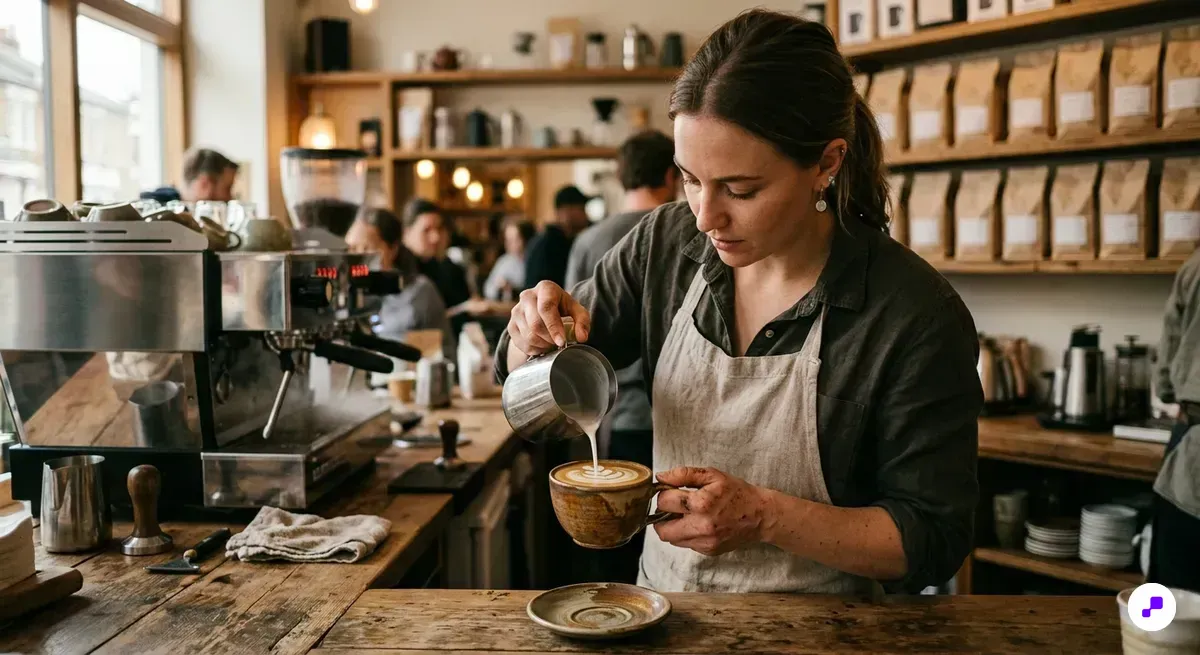
Craft coffee shops that reward regulars with loyalty perks see higher visit frequency and stronger word-of-mouth.
Phase 1: Foundation & Strategy
Before you build anything, get your strategy right. These foundational decisions determine whether your program drives real retention or becomes another forgotten feature on your Shopify store.
Define Your Primary Retention Goal
high impactbeginner
Choose one north-star metric: increase repeat purchase rate, boost subscription retention, raise average order value, or grow referral volume. Coffee and tea brands benefit most from repeat purchase rate because the product is consumable. Build every program decision around this metric.
Example
A specialty roaster set 'increase 90-day repeat purchase rate from 28% to 45%' as their goal. Every loyalty decision was evaluated against this single metric, avoiding feature creep.
Map Your Customer Segments
high impactintermediate
Identify your key customer types: daily drinkers (subscribe and forget), explorers (try everything), gift buyers (seasonal spenders), and cafe visitors (if applicable). Each segment needs different incentives. Use Shopify customer data to size each segment before designing rewards.
Example
A tea brand discovered 40% of their revenue came from just 12% of customers (daily drinkers). They designed their loyalty program to reward and retain this segment first, then expanded.
Audit Your Current Retention Stack
medium impactbeginner
List every tool you currently use for retention: Klaviyo, subscription app, reviews app, referral tools. Your loyalty program needs to integrate with these, not compete. Check for overlap and plan how data will flow between systems.
Example
A coffee brand discovered they had 3 overlapping tools sending post-purchase emails. Consolidating into a single Klaviyo flow with loyalty integration reduced email fatigue and increased engagement 22%.
Set Your Points-to-Reward Ratio
high impactintermediate
Calculate the cost of giving away 1 point and work backwards from a target reward. For coffee, a good starting ratio is $1 spent = 10 points, with a free 250g bag at 1,000 points (meaning roughly $100 spent earns a $15-20 reward). Test this ratio -- too generous erodes margins, too stingy kills motivation.
Example
A roaster modeled three point ratios and found that $1 = 10 points with a 1,000-point reward hit the sweet spot: affordable for the business (15% reward rate) and achievable for customers within 3-4 orders.
Choose Your Program Type
high impactbeginner
Decide between points-based, tiered, punch card, or hybrid. For coffee and tea Shopify stores, a hybrid approach works best: a simple punch card for casual buyers (10 purchases = free bag) plus a points-and-tiers system for power customers. Start simple and layer complexity later.
Example
A matcha brand launched with a simple 10-stamp punch card on a wallet pass. After 6 months and 2,000 members, they added tiers and points for their most engaged customers.
Wallet Pass Angle
Wallet passes support all program types natively: punch card progress, point balance, and tier status -- all visible on the lock screen.
Phase 2: Rewards & Earning Structure
This is where your program comes to life. Design rewards that your coffee and tea customers actually want, and earning rules that feel achievable. For a full breakdown of reward options, see best rewards for coffee and tea customers.
Create Your Reward Catalog
high impactbeginner
Build a catalog of 5-8 rewards at different point levels. Include at least one low-threshold reward (achievable in 2-3 orders), one mid-tier reward, and one aspirational reward. Mix product rewards (free bag, samples) with experiential ones (early access, cupping session).
Award points for non-purchase actions: leaving a review (50 pts), completing a tasting quiz (100 pts), referring a friend (300 pts), sharing on social (75 pts), subscribing (200 pts bonus). These actions build engagement and give you valuable data.
Example
A tea brand awards points for 6 different actions. Customers who earn from 3+ action types have 2.8x higher lifetime value than purchase-only earners.
Set Up Subscription Multipliers
high impactbeginner
Give subscription orders a points multiplier (1.5x or 2x) vs one-time purchases. This is the single most impactful earning rule for coffee and tea brands because it directly incentivizes the behavior that maximizes lifetime value. Make the multiplier visible at checkout.
Example
A coffee brand offers 2x points on subscription orders. Subscription signups increased 34% after the multiplier was introduced, and subscriber churn dropped 18%.
Wallet Pass Angle
Wallet pass displays: 'Subscriber Bonus: Earning 2x points on every delivery.' Visual badge distinguishes subscribers from one-time buyers.
Plan Seasonal Bonus Campaigns
medium impactintermediate
Map out 4-6 seasonal point multiplier events for the year: new harvest launch (3x points), holiday gifting season (2x points), summer iced coffee push (2x points). Pre-plan these in your calendar so they are ready to activate, not scrambled together last minute.
Example
A tea brand plans 5 seasonal multiplier events annually. These campaigns generate 35% of annual loyalty program engagement while creating a rhythm customers look forward to.
Configure Points Expiry Policy
medium impactbeginner
Set a 12-month rolling expiry on points (not a hard annual reset). This creates gentle urgency without penalizing loyal customers. Always send expiry warnings at 60, 30, and 7 days via wallet push and email. No one should lose points without knowing.
Example
A roaster switched from 6-month to 12-month rolling expiry. Active program membership increased 27% because fewer customers felt punished for their natural buying cadence.
Wallet Pass Angle
Wallet push 7 days before expiry: 'You have 680 points expiring next week. That is enough for a free bag of our Colombian Supremo -- tap to redeem.'
Phase 3: Tier Design & VIP Structure
Tiers create aspiration and reward your best customers. For coffee and tea, keep it simple: 3 tiers maximum at launch. You can always add more later. See VIP tier examples for coffee and tea for detailed structures.
Design 3 Clear Tiers
high impactbeginner
Start with three tiers: Bronze (everyone), Silver (after $150 or 5 orders), and Gold (after $400 or 12 orders). Name them something on-brand -- Sipper, Brewer, Roaster or Leaf, Blossom, Harvest. Keep thresholds achievable: 60% of active customers should reach Silver within 6 months.
Example
A specialty roaster uses Sipper ($0), Brewer ($150), and Roaster ($400) tiers. 58% of loyalty members reach Brewer within 5 months, and Brewer-to-Roaster upgrade drives 3.1x more spending.
Assign Meaningful Tier Perks
high impactintermediate
Each tier must have at least one perk the tier below does not get. Bronze: earn points. Silver: free shipping + 1.5x points. Gold: free shipping + 2x points + early access + cupping invites. The jump between tiers should feel worth chasing.
Example
A tea brand's Gold members get free shipping, 2x points, and monthly exclusive tea samples. Gold members have 91% annual retention vs 42% for Bronze.
Wallet Pass Angle
Wallet pass design changes per tier: different banner color, tier badge, and exclusive content on the reverse side.
Set Tier Maintenance Rules
medium impactintermediate
Decide whether tiers reset annually or roll forever. For coffee and tea, a 12-month rolling window works best: customers must maintain their spending level to keep their tier. This encourages consistent purchasing without punishing seasonal dips.
Example
A coffee brand uses a 12-month rolling tier evaluation. Customers at risk of tier downgrade receive a wallet push: 'You are $45 away from keeping your Gold status. Order by March 31 to stay Gold.'
Create a VIP Welcome Sequence
high impactbeginner
When a customer reaches a new tier, trigger a celebration: wallet push notification, personalized email from the founder, and a welcome gift (sample of a premium product). The moment of tier upgrade is your biggest opportunity to solidify loyalty.
Example
A roaster sends a personalized video message from the founder when customers reach Gold. These videos have a 94% view rate and are shared on social media 12% of the time.
Wallet Pass Angle
Instant wallet push on tier upgrade: 'You just made Gold! Your new perks are active now -- tap to see what you have unlocked.' Pass design updates in real-time.
Plan Tier Downgrade Communication
medium impactintermediate
How you handle tier downgrades matters as much as upgrades. Send a 60-day warning ('You are 2 orders away from keeping Silver'), a 30-day reminder, and a graceful downgrade message with a clear path back. Never surprise-downgrade a customer.
Example
A tea brand sends tier downgrade warnings at 60 and 30 days. 44% of warned customers make an additional purchase to maintain their tier, generating $18,000 in incremental revenue per quarter.
Phase 4: Wallet Pass & Technology Setup
This phase connects your loyalty program to the technology that makes it seamless. Wallet passes are the highest-impact integration for coffee and tea brands because they combine visibility, notifications, and in-store identification in one tool.
Configure Wallet Pass Design
high impactbeginner
Design your Apple Wallet and Google Wallet passes with your brand colors, logo, and key loyalty data: points balance, tier status, and next reward threshold. Keep the front clean and put detailed information (reward catalog, referral link, support) on the reverse side.
Example
A specialty roaster's wallet pass displays: brand logo, '1,240 pts | Gold Brewer | 260 pts to Platinum.' The clean design makes customers proud to show it.
Create a Shopify Flow automation that triggers a Klaviyo email with a wallet pass install link after every first purchase. The pass should arrive pre-loaded with welcome points and the customer's purchase history. This is your primary loyalty enrollment mechanism.
Example
A tea brand added wallet pass links to order confirmation emails. 39% of first-time buyers install the pass, and pass holders have 3.4x higher 90-day reorder rate.
Configure Push Notification Triggers
high impactintermediate
Set up automated wallet push notifications for key moments: points earned, reward available, tier upgrade, reorder reminder, points expiring. Each notification should have a clear call to action. Limit to 2-3 pushes per week maximum to avoid notification fatigue.
Example
A coffee brand configured 5 push notification triggers. Their open rate averages 88%, driving 34% of all loyalty-related purchases through wallet notifications alone.
If you have a cafe or attend markets and pop-ups, set up NFC or QR scanning for wallet pass identification at the point of sale. This bridges online loyalty to physical experiences and captures data you would otherwise miss.
Example
A roaster with 2 cafe locations installed NFC readers. 68% of cafe customers now identify via wallet pass, up from 15% who used to give their email at checkout.
Wallet Pass Angle
NFC tap or QR scan at counter: instant customer identification, points award, and reward redemption. No app needed -- just their phone.
Integrate with Your Email Marketing
medium impactintermediate
Connect your loyalty program data to Klaviyo (or your email platform) so you can segment by tier, points balance, and engagement level. This lets you send targeted emails like 'Gold members: your exclusive cupping event is next Thursday' or 'You are 100 points from your next reward.'
Example
A specialty tea brand syncs loyalty data to Klaviyo. Tier-segmented emails have 42% higher open rates and 3.1x higher click-through rates than generic loyalty emails.
Phase 5: Launch & Post-Launch Optimization
Launching is just the beginning. The first 90 days determine whether your program becomes a retention engine or a forgotten feature. These steps ensure a strong launch and continuous improvement.
Soft Launch with Existing Customers
high impactbeginner
Launch your loyalty program to existing customers first (via email and wallet pass) before promoting it to new visitors. This lets you test mechanics, catch bugs, and gather feedback from people who already know your brand. Pre-load their purchase history so they start with earned points.
Example
A coffee brand soft-launched to their top 500 customers with pre-loaded points. They caught 3 reward calculation errors and refined their tier thresholds before the public launch.
Add Loyalty Visibility to Your Store
high impactbeginner
Display loyalty program information on your Shopify store: homepage banner, product pages (show points earned per product), cart page (show points being earned), and a dedicated loyalty landing page. If customers do not know about the program, they will not join.
Example
A tea brand added 'Earn 120 points with this purchase' to every product page. Loyalty program awareness increased from 23% to 71% of customers, and enrollment doubled.
Track Your Core Metrics Weekly
high impactintermediate
Monitor these metrics weekly for the first 90 days: enrollment rate, points earning rate, reward redemption rate, repeat purchase rate (loyalty vs non-loyalty), and program ROI. Set benchmarks and review trends. Our retention strategies guide covers how to interpret these numbers.
Example
A roaster tracked metrics weekly and discovered their reward redemption rate was only 8% in month 1. They lowered the first reward threshold, and redemption jumped to 31% by month 3.
Gather Member Feedback at 30 Days
medium impactbeginner
Send a 3-question survey to loyalty members 30 days after enrollment: What do you like? What is confusing? What reward would make you order more? Use this feedback to iterate before the 90-day mark. Award points for completing the survey.
Example
A coffee brand surveyed members at 30 days. The top feedback was 'I did not know I had points.' They added a wallet push after every point-earning action, and engagement increased 45%.
Optimize Based on 90-Day Data
high impactintermediate
At 90 days, analyze your full data set: which rewards are popular, which are ignored, where customers drop off, and which tiers are too easy or too hard to reach. Make one major adjustment per quarter -- not more. Constant changes confuse members.
Example
A tea brand's 90-day review revealed that their 'free shipping' reward was redeemed 5x more than any other. They moved it to a tier perk (automatic for Silver+) and replaced it with a product reward. Tier upgrades increased 28%.
Pro Tips for Coffee & Tea
1
Launch with the simplest version of your program that still delivers value. A basic punch card on a wallet pass can be live in a day. You can always add tiers, points, and referral mechanics later once you have data on what your customers respond to.
2
Pre-load existing customers with retroactive points based on their purchase history. Nothing kills loyalty program adoption faster than telling a customer who has bought 30 bags that they start at zero. Honor their past relationship.
3
Your loyalty program page on Shopify should answer three questions in 5 seconds: How do I earn? What do I get? How do I join? If it takes longer than that, simplify your messaging.
4
Automate everything you can with Shopify Flow and Klaviyo before launch. Manual processes (like manually applying rewards) will break within the first week as volume increases. The more automated your program, the more reliably it performs.
5
Schedule a quarterly loyalty program review on your calendar right now. The biggest mistake is launching and forgetting. Markets change, customer preferences evolve, and your program needs to evolve with them.
Common Mistakes to Avoid
✕
Launching with too many features at once. A program with 5 tiers, 20 earning actions, and 15 rewards overwhelms customers and your team. Start with 3 tiers, 3-4 earning actions, and 5 rewards. Add complexity only when data shows you need it.
✕
Not promoting the loyalty program after launch week. Many brands announce the program once and assume customers will find it. Loyalty enrollment should be embedded in every post-purchase email, every order confirmation, and every wallet pass for the life of your store.
✕
Ignoring mobile experience. Over 70% of coffee and tea Shopify purchases happen on mobile. If your loyalty program requires logging into a desktop portal to check points or redeem rewards, you will lose the majority of your members. Wallet passes solve this entirely.
Coffee & Tea Benchmarks
30-45% for specialty coffee and tea; brands that follow this checklist typically reach 50%+ within 6 months
Avg. Repeat Purchase Rate
$220-$480 over 24 months; loyalty program members average 2.8x higher LTV than non-members
Avg. Customer Lifetime Value
25-40% enrollment rate is typical for Shopify coffee stores; wallet pass distribution increases this to 35-55%
Loyalty Program Adoption
Launch Your Coffee Loyalty Program This Week
Wallet passes, Shopify integration, and automated rewards. set up in minutes, not months. Built for coffee and tea brands.
Work through this checklist one phase at a time. Most coffee and tea brands can complete Phases 1-3 in a single week and launch within 10 days. JeriCommerce handles the technical setup -- wallet passes, Shopify integration, Klaviyo connection, and NFC checkout -- so you can focus on the strategy decisions that matter.