Launching a loyalty program for a food and beverage Shopify store requires more planning than most categories because you're dealing with subscription logic, perishable products, dietary restrictions, and consumption-based timing. This checklist ensures you don't miss the details that separate high-performing programs from the ones customers forget about. Once you're ready to go, use our loyalty ROI calculator to forecast your program's financial impact before launch.
55%
is the average customer retention rate for hospitality and food — well below ecommerce average, making loyalty programs essential
Shopify Average Retention Rates by Industry 2025
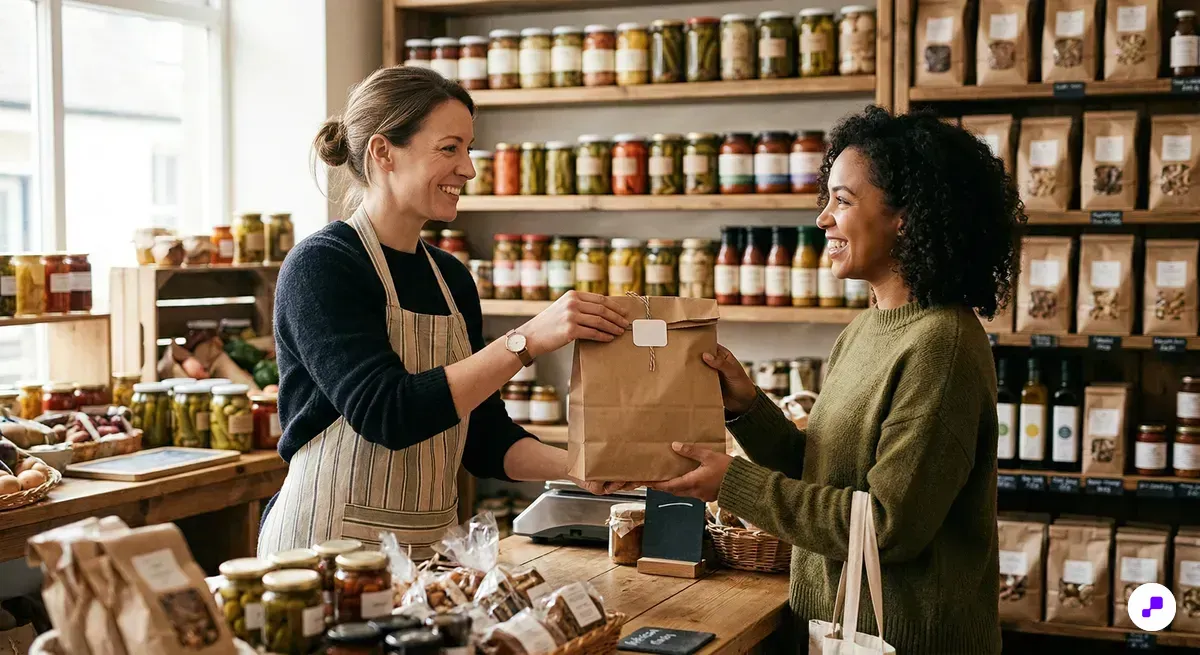
Personal interactions at the counter create the emotional connection that makes food and beverage loyalty programs stick.
Pre-Launch Planning & Strategy
Before writing a single line of code or configuring any settings, nail down your loyalty program's strategic foundation. These decisions shape everything that follows.
Define Your Program's Primary Goal
high impactbeginner
Choose one primary metric your loyalty program must improve: subscription retention rate, repeat purchase frequency, average order value, or new customer acquisition via referrals. Food brands that try to optimize for everything at once end up optimizing nothing. Pick one, measure it religiously, then expand.
Example
A coffee subscription brand chose 'reduce monthly churn below 8%' as their sole launch goal. By focusing all loyalty mechanics on retention (streak rewards, skip-instead-of-cancel, anniversary bonuses), they hit 7.2% churn within 60 days.
Map Your Customer Segments by Dietary Profile
high impactintermediate
Before launch, audit your customer base by dietary needs: vegan, gluten-free, keto, paleo, allergen-affected, omnivore. Each segment may need different reward options and communication filters. Launching without dietary segmentation means your first loyalty emails will alienate a significant portion of your audience.
Example
A health food brand discovered that 34% of their customer base had at least one dietary restriction. They launched with dietary-filtered rewards from day one, avoiding the 'wrong product promoted' complaints that plague generic programs.
Wallet Pass Angle
Plan wallet pass dietary profile fields from the start. Retroactively adding dietary data is 10x harder than collecting it during loyalty enrollment.
Calculate Your Point-to-Reward Economics
high impactintermediate
Model the cost of your loyalty program before launch. Calculate: cost per point earned, average points per order, orders needed for first reward, total program cost as % of revenue. For food brands, target first reward achievability within 2-3 purchases and total program cost below 5% of revenue.
Example
A Shopify snack brand modeled their economics: 1 point per $1 spent, first reward at 200 points ($10 free product), average order $35. First reward achievable in 6 orders. They adjusted to 2 points per $1, making it 3 orders — and engagement tripled.
Audit Your Subscription Integration Needs
high impactintermediate
If you offer subscriptions, map exactly how loyalty points interact with subscription orders: Do subscribers earn points on recurring orders? Can points be redeemed for subscription upgrades? Does skipping affect tier status? Resolve these questions before launch to avoid subscriber confusion and support tickets.
Example
A meal kit brand launched loyalty without clarifying subscription-point interaction. Support tickets spiked 40% in week one with questions like 'Do I earn points on my subscription?' They paused and added clear rules, reducing tickets to baseline within a week.
Select Your Reward Mix
medium impactbeginner
Plan your initial reward catalog with at least 5 options spanning three categories: product rewards (free items, samples, upgrades), convenience rewards (free shipping, priority delivery), and experiential rewards (early access, tastings). Browse our best rewards for food & beverage customers for proven options. A diverse catalog ensures every customer segment finds something appealing.
Example
A craft beverage brand launched with 7 rewards: free sample (150 pts), free shipping (300 pts), size upgrade (400 pts), mystery item (500 pts), free product (800 pts), virtual tasting seat (2,000 pts), and custom box (3,000 pts). The variety drove 42% higher engagement than their competitor's 'discount only' program.
Plan Your Tier Structure
medium impactintermediate
Design 3-4 tiers with clear, achievable thresholds based on annual spend or point accumulation. For food brands, tiers should unlock shipping perks (biggest value driver), product access (limited editions, early access), and community perks (tastings, events). See our VIP tier examples for food & beverage for proven frameworks. Name tiers to match your brand personality.
Example
A Shopify spice brand uses: Taster (0-499 pts), Chef (500-1,499 pts), Master Chef (1,500-3,999 pts), Grand Master (4,000+ pts). Each tier unlocks progressively exclusive spice blends and free shipping thresholds.
Wallet Pass Angle
Plan distinct wallet pass designs for each tier from launch. Tier-specific pass visuals make the upgrade feel tangible and worth pursuing.
Technical Setup & Integration
These are the technical configurations that make your loyalty program actually work. Missing any of these means broken experiences, lost points, and frustrated customers.
Install and Configure Shopify Loyalty App
high impactbeginner
Install JeriCommerce (or your chosen loyalty app) on your Shopify store and configure basic settings: point earning rules, tier thresholds, and reward catalog. Test the entire earn-and-redeem flow with a test account before going live. Verify points appear correctly in the customer's account.
Example
A food brand completed full app setup in 45 minutes using JeriCommerce's guided wizard. They ran 10 test transactions to verify points, tiers, and rewards all functioned correctly before any customer saw the program.
Connect Shopify Flow Automation
high impactintermediate
Set up Shopify Flow triggers for key loyalty events: post-purchase wallet pass delivery, birthday rewards, streak milestone notifications, subscription cancellation intercepts, and win-back sequences. Automation is non-negotiable — manual loyalty management doesn't scale past 100 members.
Example
A snack subscription brand configured 8 Shopify Flow automations before launch. Their most valuable: a post-first-order wallet pass delivery email that converts 31% of first-time buyers into loyalty members.
Wallet Pass Angle
Critical Flow trigger: 'Order Completed → Send Wallet Pass Install Email (via Klaviyo) → 1-tap install → instant loyalty enrollment.' This is your #1 acquisition flow.
Integrate Klaviyo for Loyalty Communications
high impactintermediate
Connect your loyalty app to Klaviyo and set up loyalty-specific email flows: welcome series, points earned confirmations, reward available notifications, tier upgrade celebrations, and expiry warnings. Sync loyalty data (points, tier, dietary profile) as Klaviyo profile properties for segmentation.
Example
A beverage brand syncs loyalty tier, points balance, and dietary profile to Klaviyo. Their loyalty-segmented emails generate 3.4x higher revenue per email than their generic marketing list.
Configure Wallet Pass Template
high impactintermediate
Design your Apple Wallet and Google Wallet pass templates with dynamic fields: points balance, tier status, next delivery date, and dietary profile. Set up the pass reverse with reorder links, recipe cards, and referral sharing. Test pass installation on both iOS and Android devices.
Example
A coffee brand spent 2 hours configuring their wallet pass template. The pass shows: '1,250 pts | Gold | Next delivery: March 20' on the front, and dietary profile + one-tap reorder on the back.
Wallet Pass Angle
Configure all dynamic fields before launch: primary (points), secondary (tier, next delivery), auxiliary (streak, rewards available), and back fields (dietary profile, reorder link, recipe).
Set Up Subscription-Loyalty Point Sync
high impactadvanced
If you use Shopify subscriptions (or a third-party subscription app), ensure recurring orders correctly trigger point earning events. Test that subscription actions (renewal, skip, upgrade, cancel) interact properly with loyalty tier calculations. This integration is where most food loyalty launches break.
Example
A meal kit brand tested subscription-loyalty sync for 2 weeks before launch. They caught a bug where skipped months were still earning points — fixing it before launch prevented a future trust-damaging retroactive point correction.
Test Complete Customer Journey End-to-End
high impactbeginner
Before launch, walk through the entire customer journey as a test user: make a purchase, receive wallet pass, earn points, reach a new tier, redeem a reward, refer a friend, receive push notifications. Document any friction points and fix them. This takes 2-3 hours but prevents launch-day disasters.
Example
A gourmet food brand's end-to-end test revealed that wallet push notifications weren't firing for Android users — a platform-specific bug that would have silently affected 45% of their members. Fixed before launch.
Launch & Communication
How you announce and onboard customers into your loyalty program determines adoption rates for the first 90 days. These items ensure a strong, high-conversion launch.
Create Loyalty Program Landing Page
high impactbeginner
Build a dedicated page on your Shopify store explaining your loyalty program: how to earn, how to redeem, tier benefits, and a prominent wallet pass install CTA. Use food-specific language and examples. This page will be the destination for all loyalty marketing and the #1 organic discovery point.
Example
A Shopify coffee brand's loyalty landing page converts 18% of visitors into program members. Key elements: visual tier breakdown, sample reward catalog, and a 'Join in 10 seconds' wallet pass install button.
Launch Announcement Email Sequence
high impactbeginner
Send a 3-email launch sequence to your existing customer base: Day 1 (announcement + early signup bonus), Day 3 (reward catalog showcase), Day 7 (last chance for launch bonus). Each email should include a wallet pass install link. Segment by purchase history to highlight relevant rewards.
Example
A specialty food brand's 3-email launch sequence enrolled 28% of their existing customer base in the first 10 days. The early signup bonus (500 points for joining in week 1) created urgency.
Wallet Pass Angle
Every launch email includes a one-tap wallet pass install button. Goal: convert 25-30% of existing customers into wallet-holding loyalty members in the first week.
Add Loyalty Touchpoints Across Your Store
medium impactintermediate
Embed loyalty program visibility throughout your Shopify store: product pages (points earned per product), cart page (points for this order), account page (full loyalty dashboard), and checkout (points earned on this purchase). Every touchpoint reinforces the value of the program.
Example
A snack brand added 'Earn 45 points with this purchase' to every product page. Cart page conversion increased 8% because customers saw the loyalty value stacking with each added item.
Configure Post-Purchase Wallet Pass Delivery
high impactintermediate
Set up an automated email (via Klaviyo + Shopify Flow) that delivers a wallet pass install link to every first-time buyer within 1 hour of purchase. Pre-load the pass with their purchase points and a welcome bonus. This is your single highest-leverage loyalty acquisition moment.
Example
A tea brand's post-purchase wallet pass email achieves 34% install rate. Pass installers have 3.2x higher 90-day repeat purchase rate than non-installers.
Wallet Pass Angle
Post-purchase email: 'Your loyalty wallet is ready — tap to install. You already have 150 points from today's order + 100 welcome bonus.' One-tap install.
Brief Customer Support Team
medium impactbeginner
Train your support team on loyalty program mechanics before launch: how points work, how to check a member's balance, how to manually award points for service recovery, and how to troubleshoot wallet pass issues. The first 30 days will generate the most support questions.
Example
A food brand created a 1-page loyalty FAQ for their support team. Support-driven point adjustments (service recovery) saved 23 at-risk customers in the first month — each worth an average $180 CLV.
Post-Launch Optimization
Launch is just the beginning. These ongoing optimization tasks ensure your loyalty program improves continuously and delivers compounding returns over time. Strong post-launch optimization is what separates programs with lasting customer retention from the ones that plateau.
Monitor Key Metrics Weekly
high impactbeginner
Track these metrics weekly for the first 90 days: enrollment rate, wallet pass install rate, points earning rate, redemption rate, repeat purchase rate for members vs non-members, and churn rate for loyalty subscribers vs non-loyalty. Set benchmarks and investigate any week-over-week drops immediately.
Example
A beverage brand tracks loyalty metrics weekly in a simple dashboard. They caught a 15% drop in redemption rate at week 6, traced it to a reward that was out of stock, and fixed it within 48 hours.
A/B Test Reward Offerings
medium impactintermediate
Run monthly A/B tests on your reward catalog: new reward options, different point thresholds, product-based vs discount-based rewards, experiential vs tangible. Food customers' reward preferences shift seasonally — what works in January (comfort food bundles) won't work in July (light summer samplers).
Example
A snack brand A/B tested a 'mystery snack box' reward against a '20% off next order' reward. The mystery box drove 2.8x more redemptions and 34% higher post-redemption repeat purchase rate.
Collect and Act on Dietary Profile Data
high impactintermediate
Actively prompt members to complete their dietary profile (award points for completion) and use this data to segment all loyalty communications. Filter reward suggestions, product recommendations, and push notifications through dietary compatibility. Review and update profile prompts quarterly.
Example
A health food brand's dietary profile completion rate reached 61% within 90 days. Profiled members have 2.1x higher engagement and 44% lower unsubscribe rates on loyalty emails.
Wallet Pass Angle
Prompt dietary profile completion via wallet push: 'Complete your taste profile for 200 points — we'll only recommend products you'll love.' Store on pass reverse.
Optimize Subscription Loyalty Integration
high impactadvanced
After 30 days, analyze how loyalty program membership affects subscription behavior: churn rate, skip rate, upgrade rate, and average tenure. Identify the specific loyalty mechanics that have the strongest retention impact and double down on them. Deprecate mechanics that show no measurable effect.
Example
A coffee subscription brand found that streak rewards reduced churn by 18% but tier badges had zero measurable impact. They reallocated badge development resources to building better streak mechanics and saw churn drop another 7%.
Scale Wallet Pass Features Progressively
medium impactadvanced
After establishing a base of 500+ wallet pass holders, add advanced features: geofencing for physical locations, NFC check-in at events, push notification campaigns, and dynamic pass visual updates. Scaling too early wastes effort; scaling at 500+ members gives you enough data to optimize each feature.
Example
A food brand scaled wallet features over 4 months. By month 4 (NFC launch), they had 1,200 pass holders and enough engagement data to place NFC readers at the 3 highest-traffic partner locations, maximizing ROI.
Wallet Pass Angle
Month 1: points + tier display. Month 2: push notifications. Month 3: geofencing. Month 4: NFC. Progressive rollout lets you learn from each feature before adding the next.
Pro Tips for Food & Beverage
1
Launch with fewer rewards (5-7) and add more based on redemption data. Starting with too many options causes decision paralysis and dilutes engagement across too many low-volume rewards. Food customers prefer a curated catalog over an overwhelming menu.
2
Set up a 'loyalty health dashboard' from day one that tracks: enrollment rate, active rate (members who earned or redeemed in last 30 days), wallet pass install rate, and member vs non-member repeat purchase rate. Review weekly for the first 90 days, then biweekly.
3
Collect dietary profile data during loyalty enrollment, not after. Adding a 3-question dietary quiz to the signup flow (with points incentive) captures data when motivation is highest. Asking later gets 3x lower completion rates.
4
Test your entire loyalty flow on mobile before desktop. 78% of food Shopify purchases happen on mobile, and wallet pass experiences are inherently mobile. If anything is clunky on a phone screen, fix it before launch.
5
Plan your first loyalty program email to existing customers as a 3-email sequence, not a single blast. Sequence: announcement → reward showcase → urgency/deadline. Sequenced launches drive 2.4x higher enrollment than single-email announcements.
Common Mistakes to Avoid
✕
Launching without testing the subscription-loyalty integration. This is the #1 technical failure point for food brands. If recurring orders don't correctly earn points, or if cancellation doesn't properly pause tier tracking, you'll face a flood of support tickets and eroded trust within the first week.
✕
Not collecting dietary data at enrollment. Every day you run a food loyalty program without dietary segmentation is a day you're sending irrelevant recommendations to a significant portion of your base. Add dietary profiling to your enrollment flow before launch, not as a 'phase 2' afterthought.
✕
Launching to your entire customer base at once without a soft launch period. Run the program with a 5-10% segment for 2 weeks first. Catch bugs, calibrate point economics, and train your support team on real questions before the full rollout.
Food & Beverage Benchmarks
40%+ for consumables like food and grocery (65% repeat purchase intent for online grocery)
Avg. Repeat Purchase Rate
$168-$400 depending on purchase frequency and basket size
Avg. Customer Lifetime Value
64% of loyalty program participants shop more frequently and spend more to boost their point earnings
Loyalty Program Adoption
Launch Your Food & Beverage Loyalty Program the Right Way
Wallet passes, Shopify Flow integration, Klaviyo sync, and subscription compatibility. all set up in under an hour.
Work through this checklist phase by phase — don't skip pre-launch planning to rush technical setup. JeriCommerce's Shopify app handles the heavy lifting: wallet pass generation, Shopify Flow integration, Klaviyo sync, subscription compatibility, and NFC support are all built in. Most food brands complete this entire checklist in under 2 weeks. Get started free at jericommerce.com.