
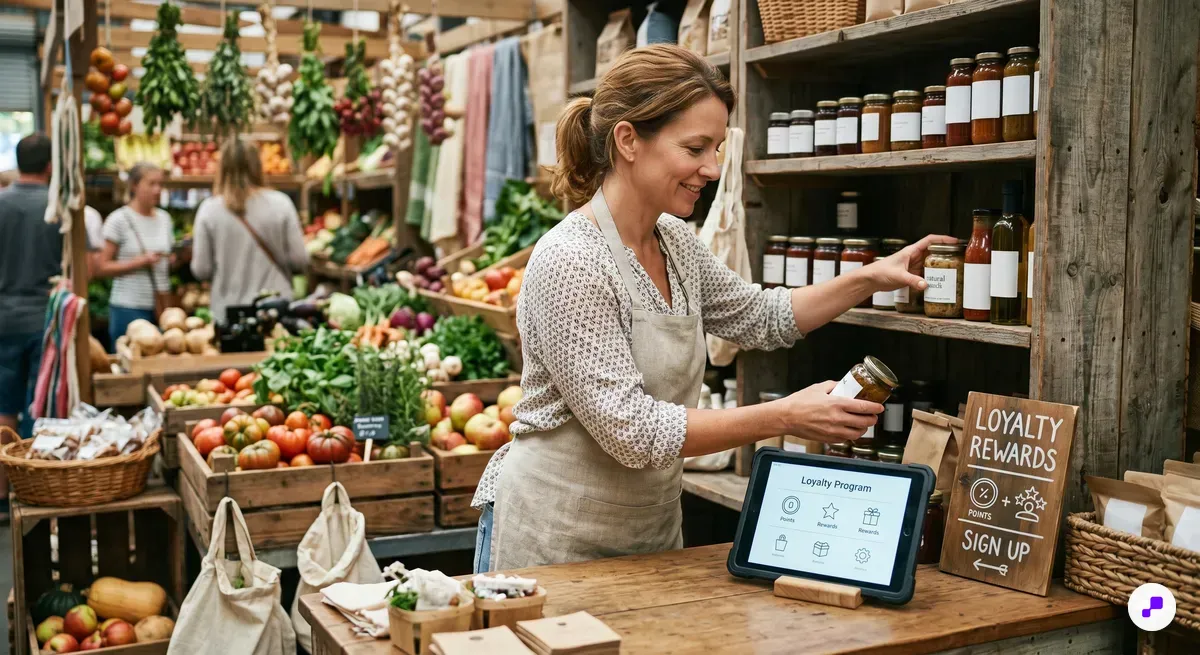
Food loyalty programs must reward purchasing consistency and flavor discovery, not just transaction size.
Most food and beverage brands launch a loyalty program by copying what fashion or beauty brands do — and immediately lose relevance. A clothing brand can offer free shipping on the fifth order because each purchase is a considered decision. But food customers buy frequently and in smaller amounts, which means your loyalty program needs a completely different rhythm.
The biggest mistake is treating every purchase the same. A customer who orders a $12 bag of coffee every two weeks is far more valuable than someone who placed a $50 gift basket order once. Yet most points programs reward the one-time big spender more generously. Your program should recognize and reward purchasing consistency above all else.
Another common failure is making rewards feel like afterthoughts. A 10% discount on the next order doesn't excite someone who already has three competing brands bookmarked. Food customers respond to exclusivity and discovery — early access to a new flavor, a limited-edition seasonal blend, or a mystery sample pack with their next order. These rewards tap into the curiosity that drives food enthusiasts. For inspiration on what works, check out our food and beverage loyalty program ideas.
The brands winning at loyalty in this space are the ones that make the program feel like a food club rather than a transaction tracker. They create experiences around tasting, discovery, and community that turn one-time buyers into brand advocates who reorder on autopilot.
Audit your customer data to identify your repeat buyers and one-time buyers — then design rewards that specifically accelerate the journey from first purchase to third purchase.
Shopify's customer segments let you identify purchase frequency patterns and target loyalty messaging to customers who haven't reordered within their typical cycle.
A wallet pass keeps your brand visible on the customer's phone between orders — a push notification saying 'Your coffee beans are probably running low — reorder and earn double points' drives reorders naturally.
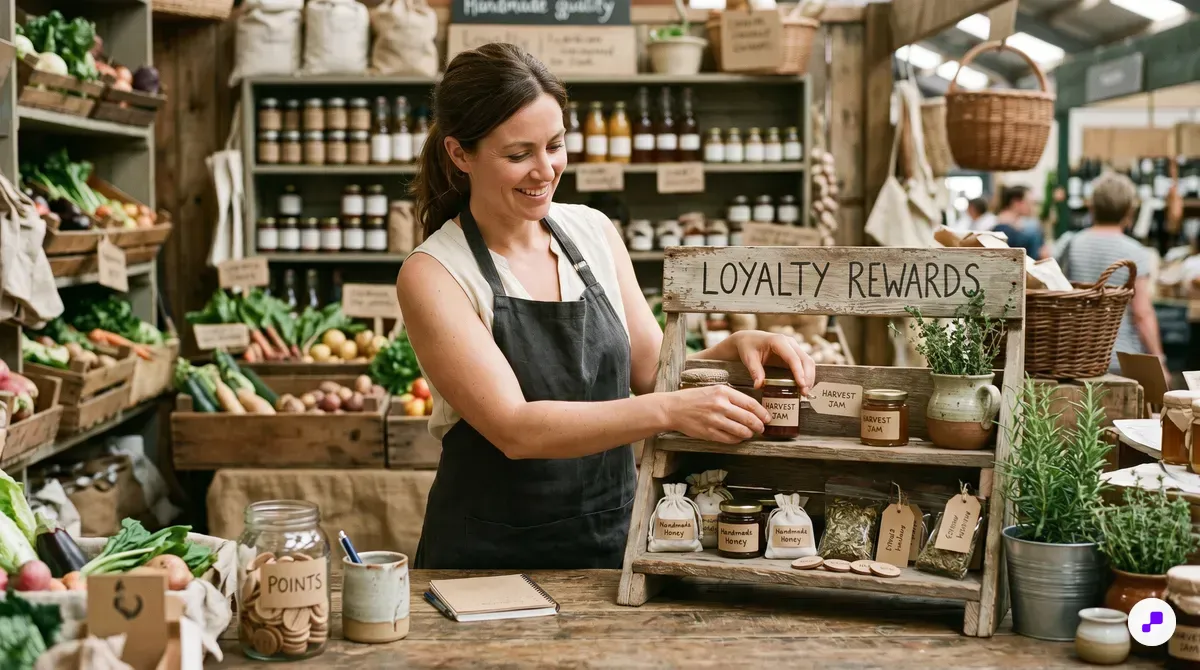
Set your first reward at the 5-order threshold to convert trial buyers into loyal regulars, using frequency bonuses to accelerate replenishment.
Your points structure needs to reflect how food and beverage customers actually buy. Unlike durable goods, consumable products have a natural replenishment cycle — and your points program should accelerate it.
Start with a straightforward earning ratio: 1 point per dollar spent. Keep the math simple so customers can calculate their rewards without a spreadsheet. For a food brand with a $30 average order value, that means a customer earns 30 points per order. Set your first reward at 150 points (5 orders) — this is the critical threshold where a customer shifts from trial buyer to loyal regular.
Layer in bonus multipliers that encourage the behaviors you want. Double points on subscription enrollments convert one-time buyers into recurring revenue. Triple points on new product launches drive trial of items that need initial momentum. A 50-point bonus for leaving a product review generates social proof while rewarding engagement. You can learn how these tactics affect your bottom line in our best rewards for food brands guide.
Consider a frequency bonus that rewards consistency: if a customer places orders in three consecutive months, award 100 bonus points. This streak mechanic is particularly powerful for consumable products because it reinforces the reordering habit you're trying to build. Missing a month doesn't penalize the customer — they just miss the bonus — which feels fair rather than punitive.
For redemption, align rewards with your margins. Free shipping on the next order is a high-perceived-value, low-cost reward that often increases order size. A free sample of a new flavor costs you pennies but makes the customer feel like an insider. A full-size product reward at the premium tier keeps the aspiration alive without breaking your unit economics.
Calculate the exact number of orders it takes for your average customer to hit your first reward — if it's more than 6, lower the threshold to prevent drop-off.
Use Shopify Flow to automatically award bonus points when a customer subscribes, reviews a product, or hits a purchase streak milestone.
Combine loyalty points with subscriptions to create a double retention lock — accumulated points discourage cancellation while rewards keep the experience fresh.
If you sell consumable food or beverage products, you likely have (or should have) a subscription option. The magic happens when your loyalty program and subscription program work together instead of competing for the same customer's attention.
The synergy is straightforward: subscriptions lock in recurring revenue, while loyalty rewards make subscribers feel valued and reduce cancellation. A subscriber who earns points on every delivery has a growing balance that represents a sunk cost — canceling the subscription means walking away from those accumulated points.
Offer a subscriber loyalty multiplier: 1.5x points on every subscription delivery versus 1x on one-time purchases. This creates a clear financial incentive to subscribe while keeping the one-time purchase path open. A customer earning 45 points per $30 subscription delivery hits their first reward in just over three months, compared to five months for one-time buyers.
Create subscription-exclusive rewards that non-subscribers can't access. Early access to seasonal flavors, a quarterly surprise bonus item in their delivery box, or the ability to customize their next delivery with a reward redemption all make the subscription feel premium. These perks combat the primary reason subscribers cancel: feeling like they're just on autopilot without any excitement.
Use loyalty status to prevent churn at the cancellation moment. When a subscriber clicks 'Cancel,' show them their points balance and what they're about to lose: 'You have 340 points — that's a free bag of our reserve blend. Are you sure you want to cancel?' This intervention alone can reduce subscription churn by 10-15%. For the complete picture on keeping food customers coming back, explore our food and beverage retention strategies.
Add a 1.5x points multiplier for subscription orders and test a 'points at risk' message in your cancellation flow this month.
Shopify's subscription APIs allow loyalty apps to detect subscription deliveries and automatically apply bonus point multipliers without manual intervention.
Product trials, early access to new flavors, and exclusive experiences outperform percentage-off discounts for food brand loyalty.
The rewards you offer will determine whether customers actively chase their next purchase or forget about your program entirely. For food and beverage, the most effective rewards fall into three categories: product rewards, experience perks, and early access.
Product rewards are the most natural fit for consumable brands. A free item from your catalog lets customers try something new without risk — and product trials are the single best driver of expanded basket size. Offer a choice of free items rather than a fixed reward: 'Redeem 200 points for any item under $15' gives the customer agency and encourages browsing your catalog.
Experience perks create emotional connection beyond the transaction. A virtual tasting session with your founder, a behind-the-scenes video of how your products are made, or a printed recipe card collection exclusive to loyalty members — these rewards don't cost inventory but they build the kind of brand affinity that survives a competitor's 20%-off campaign.
Early access is disproportionately powerful for food brands. Food enthusiasts are driven by novelty and discovery. Giving loyalty members a 48-hour window to order a new seasonal flavor before the general public creates urgency and status. Limited-edition products available only through loyalty redemption generate buzz and make members feel like insiders.
Avoid percentage-off discounts as your primary reward. They train customers to wait for deals and erode your margins without building loyalty. Instead, use free shipping as your entry-level reward — it has high perceived value, relatively low cost, and actually increases average order value as customers add items to justify the 'free' shipping they earned. You can estimate the impact of different reward structures with our loyalty ROI calculator.
Launch one loyalty-exclusive product reward this month — even a sample pack of your newest items — and track redemption rate against any discount-based rewards you currently offer.
Send a wallet push notification when a new seasonal product drops: 'Loyalty members get 48-hour early access — tap to shop.' These notifications hit 90%+ delivery rates, far above email.
Post-purchase enrollment and package insert QR codes convert at the highest rates because they catch customers at peak brand enthusiasm.
A loyalty program nobody joins is a loyalty program that doesn't exist. For food and beverage DTC brands, your enrollment strategy needs to meet customers at the moments when they're most excited about your products — and that starts with the first purchase.
Build enrollment into the post-purchase experience. The order confirmation page is prime real estate: 'You just earned 30 points on this order — join our rewards program to save them and earn a free product after 5 orders.' This message converts at 3-5x the rate of a generic homepage loyalty widget because the customer already has positive momentum from buying.
For email subscribers who haven't purchased yet, use a sign-up bonus to create a dual incentive: 'Join our loyalty program and get 100 bonus points — that's a head start toward free shipping on your first order.' This turns loyalty enrollment into a conversion driver rather than a post-purchase afterthought.
Package inserts are uniquely powerful for food brands. A small card in every shipment that says 'Scan this QR code to join our rewards club and unlock a free sample with your next order' has a tactile, personal quality that digital-only brands can't match. The QR code can link directly to a wallet pass download, making enrollment a 10-second process.
Leverage social media for enrollment by making points earnable through engagement. Award 25 points for following your brand on Instagram, 50 points for sharing a product photo with your branded hashtag, and 100 points for a video review. These social actions amplify your reach while building the customer's investment in your brand. Track your program's financial impact with our retention rate calculator.
Add a loyalty enrollment prompt to your order confirmation page and include a QR-coded card in your next batch of shipments — measure enrollment rates from each channel after 30 days.
Shopify's post-purchase checkout extensions let you add a loyalty enrollment step directly in the order confirmation flow, capturing customers without redirecting them.
A QR code on your package insert links directly to an Apple or Google Wallet pass — the customer taps once to add it, and your brand has a permanent presence on their phone.
Wallet passes keep your food brand visible between purchases with 85-95% notification delivery rates — far beyond email or app-based alternatives.
For food and beverage brands, the gap between purchases is where you win or lose. A customer might love your cold brew, but if they don't think about you when they're running low, they'll grab whatever's convenient at the grocery store. Digital wallet passes solve this problem by keeping your brand visible on the customer's phone every single day.
A wallet pass sits in Apple Wallet or Google Wallet — right next to credit cards and boarding passes. Every time the customer scrolls through their wallet, they see your brand, their points balance, and any available rewards. This passive visibility is more effective than any email drip campaign because it requires zero action from the customer.
The real power comes from push notifications. Wallet pass notifications see 85-95% delivery rates compared to 20-30% for email. That means when you send a time-sensitive message — 'Double points this weekend on all new arrivals' or 'Your favorite roast is back in stock' — it actually reaches the customer. For food brands with seasonal or limited-run products, this direct line of communication is invaluable.
Wallet passes also update dynamically. When a customer earns points on a purchase, their pass refreshes automatically to show the new balance. When they hit a new tier, the pass design changes. When a reward becomes available, a notification appears on their lock screen. This real-time feedback loop keeps the loyalty program active and engaging without requiring the customer to open an app or check a website.
The enrollment process is frictionless: send a link via email or text, the customer taps to add, and the pass is on their phone permanently. No app download, no account creation beyond what they already have as a Shopify customer. Most food brands see 65-75% adoption within the first two months because the barrier is essentially zero. Explore how this compares to traditional channels in our wallet pass guide for food brands.
Design a wallet pass template with your brand colors and a prominent points balance display, then test it with 20 existing loyalty members before a full rollout.
Wallet passes turn every phone unlock into a brand impression, keeping your products top-of-mind during the critical reorder window for consumable goods.
The repeat purchase rate differential between loyalty members and non-members is your most important metric — it proves whether the program drives real behavior change.
A loyalty program that doesn't get measured doesn't get improved. For food and beverage brands, the metrics that matter are different from fashion or electronics because your success depends on repurchase frequency, not just one-time conversion.
Track these five core metrics monthly: enrollment rate (target 50%+ of customers), active participation rate (members earning or redeeming in the last 30 days — target 40%+), repeat purchase rate differential (compare loyalty members vs. non-members), average order frequency (are loyalty members ordering more often?), and subscription conversion rate from loyalty members. That last metric tells you whether your loyalty program is feeding your subscription funnel.
Run a cohort analysis quarterly. Take customers who joined your loyalty program in month one and track their behavior over 3, 6, and 12 months. Compare them against a control group of non-members. Most food brands find that loyalty members reorder 25-40% more frequently and have a 20-30% higher lifetime value. These numbers justify every dollar you spend on rewards.
A/B test your rewards regularly. Swap out underperforming rewards for new options every quarter. If free shipping has a 60% redemption rate but your free sample reward only hits 15%, either the sample isn't appealing or the points threshold is too high. Test lowering the threshold before removing the reward entirely.
Pay attention to your points liability — the total value of unredeemed points in your system. If this number keeps growing without corresponding redemptions, your rewards aren't compelling enough or your customers don't understand how to redeem. A healthy program shows steady points earning and redemption, with liability stabilizing at a predictable level. Use our customer lifetime value calculator to model how loyalty improvements affect long-term revenue.
Set up a monthly dashboard comparing order frequency and lifetime value between loyalty members and non-members, and review it on the first of each month.
Shopify's customer segments and analytics let you build loyalty vs. non-loyalty cohorts and track purchase frequency, average order value, and lifetime value side by side.
A food and beverage loyalty program built around replenishment rhythms, subscription synergy, and product discovery can dramatically increase repeat purchases and customer lifetime value. The key is rewarding consistency over transaction size and using wallet passes to stay visible between orders.
JeriCommerce makes it simple to launch a omnichannel loyalty program for your food brand — digital passes, automatic points on Shopify orders, push notifications timed to reorder cycles, and subscription integration, all without asking customers to download an app.
Launch a loyalty program that drives reorders. automatic points, wallet pass notifications timed to replenishment cycles, and rewards your customers actually want.
Install Free on Shopify