
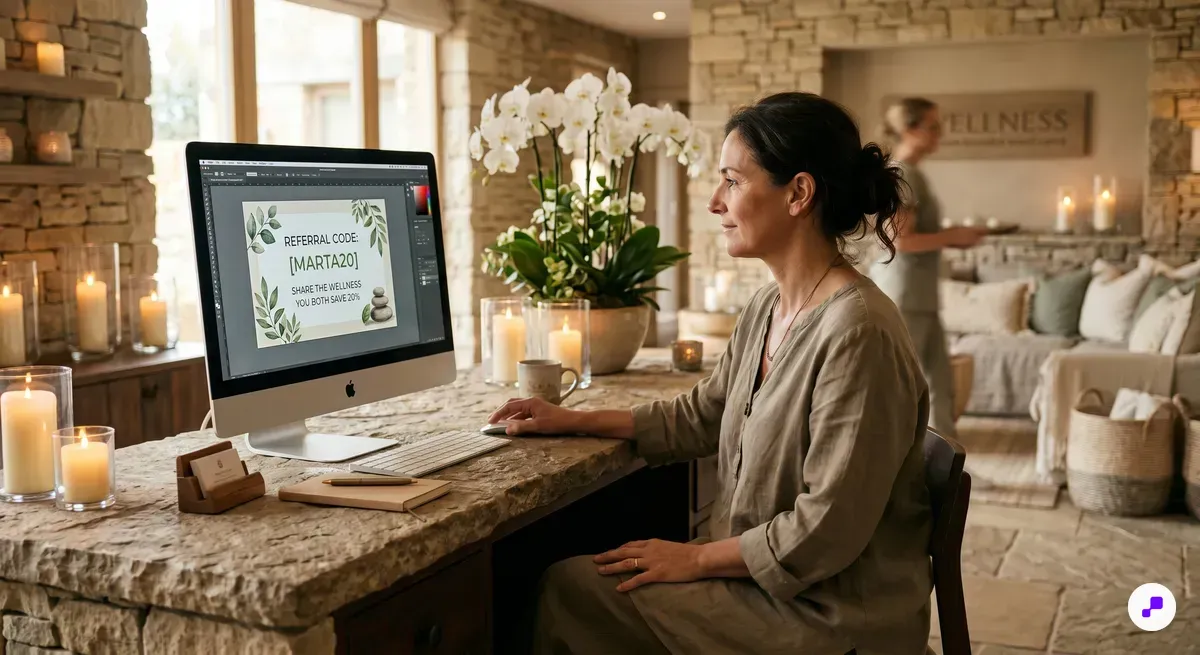
Spa and salon services are inherently personal and trust-driven. Clients literally put their appearance in your hands — whether it is a haircut, a facial, or an injectable treatment. This means personal recommendations carry more weight than any advertisement. When a friend says 'my esthetician is amazing,' that endorsement is worth more than a thousand Instagram impressions.
The economics are compelling. Referred clients have a 37% higher retention rate than clients acquired through paid channels, according to research from the Harvard Business Review. They also spend more per visit, because they arrive with pre-built trust. A referred medspa client does not need to be convinced of your expertise — their friend already did that work.
Compare this to the alternatives. Google Ads for spa-related keywords can cost $5-$15 per click, with conversion rates around 3-5%. That means $100-$500 to acquire a single new client. Groupon brings volume but at devastating margins — 50% or more of the revenue goes to the platform, and Groupon clients are notoriously difficult to convert to full-price regulars.
Referrals cost a fraction of paid acquisition. A typical referral reward of $25-$50 in service credit or loyalty points generates a new client who is pre-qualified, trusts your brand, and is more likely to become a long-term regular. When you layer a referral program on top of your existing loyalty program, you create a self-sustaining growth engine where loyal clients continuously bring in new clients who themselves become loyal.
For medspas, referrals are especially powerful because treatment decisions involve a higher level of trust. Someone considering Botox or laser treatments is far more likely to act on a personal recommendation than a Google ad. A referral program gives your satisfied clients a structured way to share that trust.
Referred spa clients have 37% higher retention and cost a fraction of paid acquisition — referrals are the highest-ROI growth channel for service businesses.
Ask your top 20 clients how they originally found you. If most say 'a friend told me,' you already have organic referral energy — a formal program will multiply it.
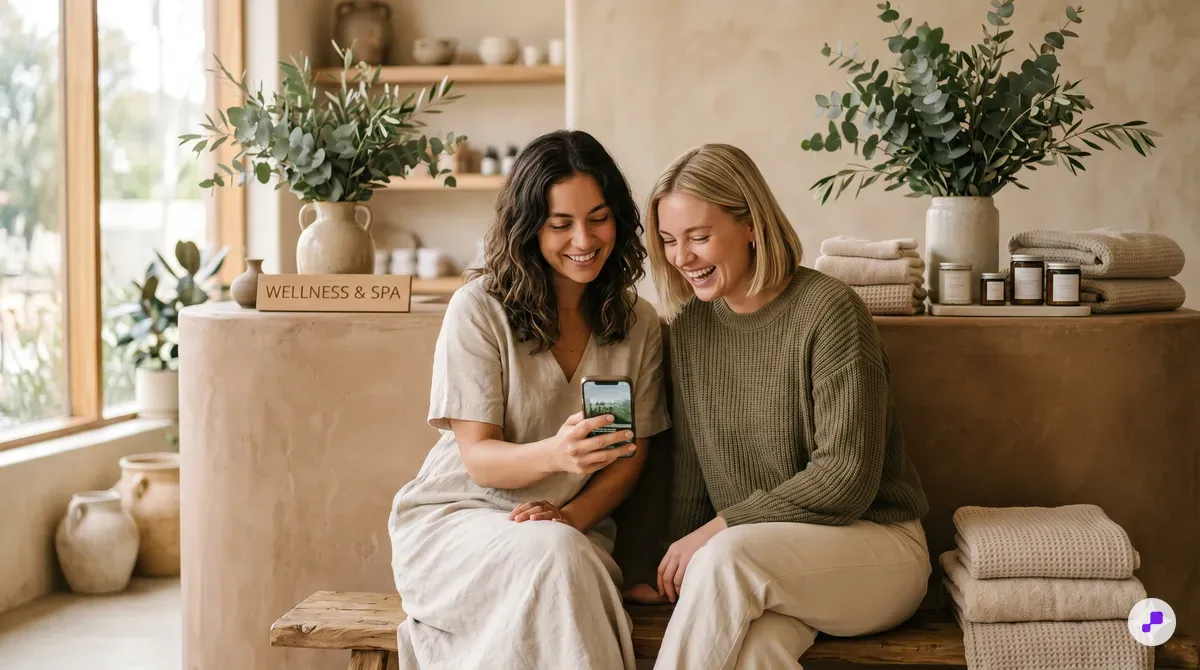
The referral reward structure has to work for three parties: the referring client, the new client, and your bottom line. Get the balance wrong on any side and the program underperforms.
A dual-sided reward is the gold standard. Both the referrer and the new client receive something. This eliminates the awkwardness of referring — your client is not just asking a friend to try your spa, they are giving them a gift. Common structures include: referrer gets $25 in loyalty points and new client gets $25 off their first visit, or referrer gets a free add-on service and new client gets a complimentary upgrade on their first appointment.
For spas and salons, service-based rewards tend to outperform pure discounts. Instead of '$25 off,' offer 'a complimentary express facial with your first appointment' or 'a free deep conditioning treatment added to your first haircut.' These rewards feel more generous than their actual cost, introduce the new client to your premium services, and do not create a discount expectation.
For medspas, consider tiered referral rewards based on the value of the referred service. A referral that leads to a $100 facial booking might earn 100 bonus loyalty points, while a referral resulting in a $500 Botox appointment earns 500 points. This aligns incentives — your biggest advocates are rewarded proportionally for the value they bring.
Another effective structure is a milestone-based referral bonus. For example, the first referral earns standard points, but the third referral in a quarter earns a premium reward like a free full service. This motivates serial referrers — the clients who are naturally inclined to spread the word — to keep going. Check out real referral program examples from successful spas and salons to see these structures in action.
Whatever structure you choose, keep it simple to explain. If a client cannot describe the referral offer to a friend in one sentence, it is too complicated.
Dual-sided, service-based referral rewards outperform pure discounts — they feel more generous, introduce new services, and avoid devaluing your brand.
Write your referral offer in one sentence. If it takes more than that, simplify. Example: 'Refer a friend — you both get a free scalp massage with your next appointment.'
The biggest barrier to referrals is not motivation — it is friction. Your clients want to refer friends, but life gets busy and good intentions fade. The easier you make the referral process, the more referrals you will get.
Digital wallet passes solve the friction problem elegantly. When a client's loyalty pass is on their phone, the referral link is always accessible. With a single tap, they can share a personalized referral link via text, email, WhatsApp, or any messaging app. The link carries their referral code automatically, so tracking is seamless — no need to remember codes or fill out forms.
Create a shareable referral landing page that does the selling for you. When a referred friend taps the link, they should see a clean, mobile-friendly page that explains the offer, showcases your spa or salon with attractive photos, and makes booking easy. Include a prominent 'Book Now' button and a note like 'Your friend Sarah thought you would love us — enjoy a complimentary deep conditioning treatment with your first visit.'
Text messaging is the most effective referral channel for spas and salons. When a client texts a friend a referral link, it feels personal and arrives in a context where the friend is already engaged. Email referrals work too, but response rates are lower. Social media sharing (posting a referral link on Instagram Stories, for example) can drive volume but attracts less qualified leads.
Timing matters enormously. The best moment to ask for a referral is immediately after a great service experience — when the client is glowing from a facial, excited about a new hair color, or thrilled with their injectable results. Train your team to plant the seed during checkout: 'We would love to welcome your friends — you can share your referral link right from your wallet pass.' This is more natural and effective than a follow-up email three days later.
Use the referral ROI calculator to model how many referrals you need per month to hit your growth targets. Even five successful referrals per month can add $30,000-$60,000 in annual revenue for a typical spa.
Reduce referral friction to a single tap — wallet passes with embedded referral links turn good intentions into actual referrals.
Time your referral ask for the checkout moment. Add a line to your checkout script: 'If you loved today's treatment, you can share a referral link right from your phone — you'll both get a reward.'
Wallet passes with built-in referral links make sharing effortless — clients tap their pass, choose a contact, and send a personalized referral in seconds.
Many spa and salon owners hesitate to promote their referral program because they do not want to seem salesy. But there is a difference between pushy selling and confident sharing. Your clients genuinely enjoy your services — giving them a way to share that enjoyment (and be rewarded for it) is a service, not a sales pitch.
Start with in-spa touchpoints. Place a small, elegant sign at the reception desk and in treatment rooms: 'Love your experience? Share the feeling — refer a friend and you both get rewarded.' Keep the design consistent with your brand aesthetic. This is a spa, not a car dealership — the tone should match.
Include referral information in your post-visit communication. After every appointment, send a follow-up email or SMS that thanks the client, summarizes their loyalty points earned, and includes a simple referral prompt: 'Know someone who would love a [treatment they just received]? Share your referral link and you'll both earn a reward.' Place the referral link prominently — do not bury it at the bottom.
Leverage seasonal moments for referral pushes. Before Valentine's Day: 'Give the gift of relaxation — refer a friend to a couples massage and earn double points.' Before summer: 'Your friends need beach-ready skin too — share your referral link for bonus rewards.' Before the holidays: 'The best gift is an experience — refer friends for holiday spa packages.' These campaigns feel timely and relevant rather than pushy.
Encourage your service providers to mention the program naturally during appointments. A stylist can say, 'I love how this color turned out — if any of your friends ever want similar results, our referral program gives you both a reward.' A medspa provider can say, 'These results are going to be great — if anyone asks what you did, feel free to share your referral link.' These organic mentions are the most effective promotion because they come from a trusted source at a moment of satisfaction.
Track which promotion channels drive the most referrals. You might find that post-appointment SMS generates 3x more referrals than email, or that seasonal campaigns outperform evergreen messaging. Double down on what works.
Promote referrals at the moment of maximum satisfaction — right after a great treatment — using elegant, brand-consistent messaging that feels like sharing, not selling.
Write three seasonal referral messages (spring, summer, holiday) and schedule them now. Having copy ready means you will actually run the campaigns instead of putting them off.
Shopify's customer segmentation lets you identify your most active clients and send targeted referral campaigns to the people most likely to participate.
A referral program without tracking is just a vague discount offer. To optimize your program and prove its value, you need to measure specific metrics consistently.
The first metric is referral rate: what percentage of your active clients have made at least one successful referral? A healthy referral rate for spas and salons is 10-20%. If you are below 10%, your rewards may not be compelling enough or your promotion is insufficient. If you are above 20%, you have a strong program — look for ways to scale it.
The second metric is referral conversion rate: of all referral links shared, what percentage result in a booked and completed first appointment? This tells you how persuasive your referral offer is to new clients. If clients are sharing links but friends are not booking, your landing page or offer needs work. A good conversion rate is 15-30%.
The third metric is referred client lifetime value. Track how referred clients perform over 6 and 12 months compared to clients from other channels. You should see that referred clients visit more frequently, spend more, and churn less. This data is powerful ammunition for investing more in your referral program and less in paid acquisition.
The fourth metric is cost per acquisition through referrals. Add up the total value of rewards given to referrers and new clients, then divide by the number of new clients acquired. Compare this to your Google Ads CPA, Instagram CPA, and Groupon CPA. In most cases, referral CPA will be 50-80% lower than paid channels.
Pull these metrics monthly. Create a simple dashboard — even a spreadsheet works — that shows trends over time. Share the results with your team: 'Last month we got 15 new clients through referrals at $22 each, versus $120 each through Google Ads.' This builds organizational buy-in and motivates staff to keep promoting the program. For more retention benchmarks specific to spas, check our industry data page.
Track referral rate, conversion rate, referred client lifetime value, and cost per acquisition — referral CPA is typically 50-80% lower than paid channels.
Create a 'referral scorecard' spreadsheet with four columns: referral links shared, new clients booked, reward cost, and CPA. Update it monthly and share results with your team.
Different spa and salon businesses have different referral dynamics. Here are specific referral program ideas tailored to three common business types.
For hair salons, the strongest referral currency is the stylist relationship. Clients are loyal to their stylist, and they want their friends to have the same great experience. Structure the referral around the stylist: 'Refer a friend to [stylist name] — you both get a free deep conditioning treatment on your next visit.' Including the stylist's name makes the referral feel personal and specific. Bonus: track referrals per stylist and create a friendly competition with rewards for the team member whose clients generate the most referrals.
For day spas and wellness centers, the referral angle is shared experience. Many spa visits are inherently social — friends go together for birthday spa days, bachelorette celebrations, or just a girls' day out. Create a 'bring a friend' referral that rewards both parties when they book together: 'Book a spa day with a first-time friend and you both get a complimentary aromatherapy upgrade.' The shared experience makes the referral feel like an invitation, not a sales pitch.
For medspas, referral programs need to navigate the sensitivity of aesthetic treatments. Many clients prefer discretion about their treatments. Respect this by making referrals private — a personal text message with a referral link, not a public social media post. Frame the referral around the provider's expertise rather than the specific treatment: 'If anyone asks about your skin, feel free to share your referral link to our practice.' The reward can be substantial because medspa services have high margins — $50-$100 in loyalty points for a successful referral is appropriate when the referred client's first treatment might be $300-$800.
Across all business types, make sure your program recognizes and rewards your top referrers. A client who brings in five or more new clients per year deserves special recognition — a dedicated thank-you from the owner, an exclusive VIP perk, or a premium referral tier with enhanced rewards.
Tailor your referral program to your business type — salon referrals should be stylist-centric, spa referrals experience-centric, and medspa referrals privacy-conscious.
Identify your top 5 referrers from the past year (even informally) and personally thank them. Then ask what would motivate them to refer even more — their answers will shape your program design.
Wallet pass referral links can be customized by business type — a salon pass might say 'Share your stylist,' while a medspa pass says 'Share your provider.'
Your referral program should not exist in isolation — it should be a built-in component of your broader loyalty strategy. When referrals and loyalty work together, they create a flywheel that accelerates growth.
The simplest integration is awarding loyalty points for referrals. Instead of giving a separate referral reward (a gift card, a one-time discount), credit referral rewards as loyalty points. This keeps clients engaged in your points ecosystem and encourages them to earn more points through both visits and referrals. A client who earns 200 points from a referral is now 200 points closer to their next reward — which motivates another visit, another purchase, and potentially another referral.
Tier your referral rewards alongside your loyalty tiers. A Bronze member might earn 100 points per referral, while a Gold member earns 200 points. This creates an additional incentive to climb tiers and rewards your most loyal clients proportionally. Gold members are also your most credible referrers — they know your business intimately and their recommendations carry more weight.
Use referral activity as a tier qualification criterion. For example, require 2 successful referrals (in addition to spending thresholds) to reach your highest loyalty tier. This ensures your VIP members are not just high spenders but active advocates. The combination of spending and referring is the hallmark of your most valuable clients.
Create referral-specific campaigns that tie into loyalty milestones. When a client hits a loyalty milestone (500 points, Silver tier), celebrate it with a message that includes a referral prompt: 'You just hit Silver status! Know someone who'd love the VIP treatment? Your referral link is in your wallet pass.' The positive emotion of the milestone makes clients more likely to refer.
The data from integrated referral-loyalty programs is also richer. You can see not just who referred whom, but the complete journey: referrer's loyalty tier, the referred client's first purchase, their subsequent visits, and whether they themselves become referrers. This chain of referrals — referred clients who become referrers — is the ultimate sign of a healthy program.
Integrate referral rewards into your loyalty points system to create a growth flywheel — each referral drives more engagement, which drives more referrals.
Add referral activity to your loyalty tier requirements. Requiring 2 referrals for top-tier status ensures your VIPs are both loyal spenders and active advocates.
Shopify Flow can automate the referral-loyalty connection: when a referred client completes their first appointment, Flow awards points to the referrer and sends a thank-you notification automatically.
A referral program turns your satisfied spa, salon, or medspa clients into a predictable growth engine. By choosing the right reward structure, reducing sharing friction with digital wallet passes, and integrating referrals with your loyalty program, you create a self-sustaining cycle where every happy client has the potential to bring in another.
JeriCommerce wallet passes include built-in referral sharing — your clients can refer friends with a single tap, and you can track every referral automatically through Shopify.
JeriCommerce wallet passes include one-tap referral sharing. every satisfied client becomes a growth engine for your spa or salon.
Install Free on Shopify