Home decor shopping has always involved multiple touchpoints. Long before the term "omnichannel" existed, people flipped through catalogs, visited furniture showrooms, and asked friends for recommendations before making a purchase. What's changed is the number and speed of those touchpoints — and the technology available to connect them.
The typical home decor purchase journey now spans 3-5 channels. A customer discovers your brand on Instagram or Pinterest, visits your website to browse the full collection, reads reviews and checks dimensions, visits your showroom or a pop-up to see the piece in person, goes home to discuss with her partner, and purchases online (or returns to the showroom) days later. Each of those touchpoints is a loyalty opportunity — and if you're only tracking the final purchase, you're measuring 20% of the engagement.
Omnichannel loyalty is especially valuable for home decor because the category combines high consideration with high emotion. Furniture and decor aren't impulse purchases for most people — they research, compare, and deliberate. But they're also deeply emotional — a customer choosing a dining table is imagining family dinners for the next decade. A loyalty program that follows her across that entire journey, rewarding her engagement at each step, builds a relationship that purely transactional programs can't match.
The business case is straightforward: cross-channel home decor customers spend 30-50% more than single-channel customers. They're also 2-3x more likely to make a repeat purchase within 12 months. These aren't aspirational numbers — they're what brands see when they connect their channels properly. If you're serving customers who shop both online and in your showroom, every dollar spent connecting those channels pays for itself within months. For baseline loyalty program ideas, see our home decor loyalty ideas.
The brands winning in home decor today are the ones that treat every customer interaction — whether it's a 45-minute showroom visit or a midnight mobile browsing session — as part of one continuous relationship.
Cross-channel home decor customers spend 30-50% more and retain at 2-3x the rate of single-channel customers — connecting your channels is a revenue multiplier.
Survey 20 recent customers about their purchase journey — how many channels did they touch before buying? The answer will reveal how much value you're leaving untracked.
Shopify's unified commerce platform connects online and POS data in one customer profile, providing the technical foundation for omnichannel loyalty without enterprise-level investment.
The core of omnichannel loyalty is one customer profile that captures every interaction across every channel. Without it, your showroom team is operating blind to online behavior, your email campaigns ignore in-store experiences, and your loyalty program fragments into parallel tracks that confuse customers.
Shopify's architecture naturally supports this. When a customer creates an account online and later makes an in-store purchase through Shopify POS using the same email, both transactions merge into one profile. Her total spend, points balance, tier status, and purchase history are unified automatically. This is the minimum viable omnichannel profile — and it works out of the box.
But a truly powerful profile goes further. You want to capture: showroom visit data (when she visited, what she looked at, whether she sat on the sofa for 20 minutes), online browsing behavior (which collections she browses, what she wishlists, what she adds to cart and removes), style preferences (modern vs. traditional, neutral vs. colorful, minimalist vs. maximalist), room projects (she's working on a living room now, kitchen next year), and communication preferences (email vs. push notification, morning vs. evening). This enriched data powers the personalized experiences that drive repeat purchases.
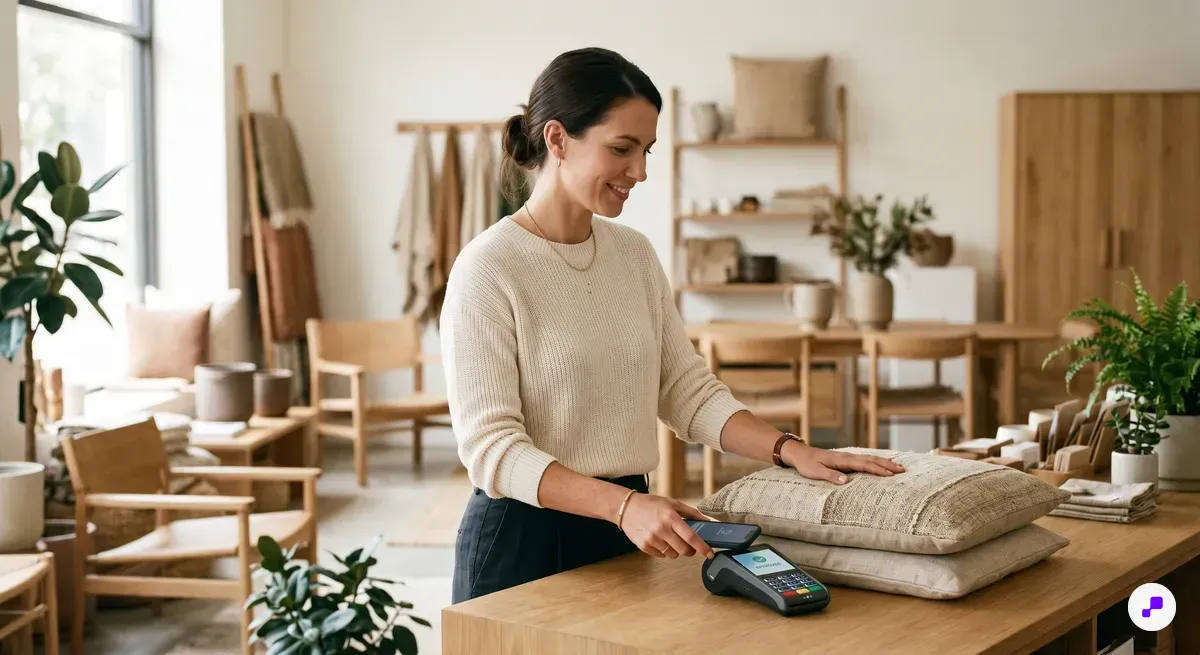
Wallet passes are the technical bridge that makes enriched profiles practical. Once a customer adds your loyalty pass to her phone, every physical interaction becomes automatically tracked. She taps at the showroom entrance — visit logged. She taps at the checkout counter — purchase connected to her profile. She receives a push notification and clicks through — engagement tracked. No separate apps, no QR codes, no asking "Can I have your email?" at every touchpoint.
The biggest implementation challenge is identity resolution for existing customers. You likely have separate customer records in your online store and POS. Start by running a data merge based on email and phone number matches. For unmatched records, a wallet pass enrollment campaign solves the problem: when an in-store customer adds the pass, she's prompted to enter her email, which links her to any existing online profile.
Aim to have 80%+ of your active customers on unified profiles within 6 months of launching your omnichannel program. Unlinked profiles represent lost data and a fragmented experience that undermines the entire strategy.
Wallet passes solve identity resolution by linking physical and digital interactions through one device — no separate app or manual lookups required.
Run a customer data audit this week — compare your online and POS customer lists and identify the overlap percentage. That gap is your unification opportunity.
Shopify POS and online store share the same customer database, merging profiles automatically on email or phone number match.
The wallet pass is the customer's portable identity — one tap at the showroom, one click from a notification, one profile everywhere, no login friction.
Your loyalty earning structure should do two things: reward purchases consistently across channels and actively incentivize cross-channel behavior. The second part is where most programs stop short.
Base earning must be identical across channels: the same points per dollar whether the customer buys online, in your showroom, or at a pop-up event. Any discrepancy — "You earn more points online" — creates frustration and undermines trust. Your customer shouldn't have to think about which channel gives her the best loyalty deal. Consistency is the foundation.
Cross-channel bonuses are where the magic happens. Award 100 bonus points when a customer who has only shopped online makes her first showroom visit (tracked via wallet pass tap at the door). Give 100 bonus points when a showroom-only customer makes her first online purchase. These cross-channel first bonuses encourage customers to experience your brand on a new channel, which data shows leads to higher lifetime value.
Showroom-specific earning creates data that powers personalization. Award 25 points for checking in at the showroom (even if she doesn't buy — you want to track visits). Give 50 points for booking a showroom styling consultation. Add 25 points for scanning a product QR code (which tells you what she's interested in without requiring a purchase). These micro-interactions build a rich preference profile while keeping the customer engaged with the loyalty program.
Online-specific earning fills the gaps between physical visits. Award 25 points for creating a wishlist or room board. Give 50 points for writing a product review with a photo. Add 25 points for sharing a product on social media. These actions cost you nothing but generate valuable data and user-generated content while keeping online engagement alive.
Redemption must be fully cross-channel. Points earned online should be redeemable in the showroom, and vice versa. A customer who earned 1,000 points from online purchases should walk into your showroom, tap her wallet pass, and see "You have a $50 credit available" on the POS screen. Any channel restriction on redemption breaks the omnichannel promise. Explore more reward options in our best rewards for home decor.
Keep base earning rates identical across channels and use bonus points to specifically reward cross-channel behavior — the first online purchase for a showroom customer, and vice versa.
Create a 100-point cross-channel first bonus — reward showroom customers for their first online purchase and online customers for their first showroom visit.
Shopify POS and online checkout both access the same loyalty balance, enabling identical earning rates and seamless cross-channel redemption.
Your showroom is the highest-impact loyalty touchpoint in your entire omnichannel ecosystem. It's where customers form emotional connections with your products, where personalized service creates lasting impressions, and where loyalty data becomes actionable in real time. Most home decor brands treat their showroom as a sales floor — the smart ones treat it as a loyalty activation center.
Start at the entrance. Install an NFC reader where customers can tap their wallet pass upon arrival. This does three things: logs the visit for loyalty points, alerts your staff that a loyalty member has entered (with her name, tier, and recent browsing activity on a staff tablet), and personalizes the experience from the first moment. A "Welcome back, Sarah — we just got new arrivals in the modern minimalist collection you love" greeting transforms a generic showroom visit into a personalized consultation.
Equip your showroom staff with tablet access to loyalty profiles. When Sarah sits on a sofa for 15 minutes, the staff member can note "interested in the Oslo sectional — medium gray" in her profile. When she asks about delivery timelines, the staff member can see her online cart and know she's also considering the matching ottoman. This context turns every interaction into a data-enrichment opportunity that powers future marketing.
Create showroom-exclusive loyalty moments. A monthly "Design Hour" for Gold and Platinum members — wine, snacks, and a 30-minute styling session with your design team — creates experiences that can't be replicated online. A "First Look" event when new collections arrive in the showroom gives loyalty members a reason to visit before products are even photographed for the website. These experiences build the emotional loyalty that withstands price competition.
Use the showroom for loyalty enrollment. A customer who walks into your showroom and touches your products is already engaged — converting her to a loyalty member is far easier than converting a cold website visitor. Train staff to offer enrollment during every interaction: "Would you like to join our design rewards program? You'll earn points today and get notified when the piece you loved goes on sale." A wallet pass link sent via text message completes enrollment in under 15 seconds.
Track showroom-to-online conversion. How many customers who visit the showroom purchase online within 7 days? This metric reveals whether your showroom is an effective loyalty touchpoint or just a place where people browse and leave.
Install NFC check-in at your showroom entrance and equip staff with loyalty profile tablets — the personalized greeting is where omnichannel loyalty becomes real.
Set up a wallet pass tap point at your showroom entrance this month and train staff to check the loyalty profile tablet before approaching each member.
Shopify POS on a staff tablet displays the customer's full profile — online browsing, purchase history, loyalty tier — enabling personalized showroom interactions.
The wallet pass tap at showroom entry triggers an automatic check-in, awards visit points, and alerts staff with the customer's profile — all in one contactless gesture.
Pop-up events, market days, and design fairs are high-energy omnichannel moments for home decor brands. They combine the discovery excitement of online browsing with the tactile experience of a showroom — and they often reach customers who haven't visited either channel before. Treating them as loyalty touchpoints multiplies their impact.
Bring your full loyalty infrastructure to every event. A portable NFC reader connected to Shopify POS via mobile device lets you run the same loyalty program at a weekend market as you do in your showroom. Existing members tap their wallet pass and earn bonus points for attending. New customers can enroll on the spot — a text message with the wallet pass link gets them into the program in seconds.
Event-specific earning creates excitement and urgency. Award 200 bonus points just for attending (checked in via wallet pass). Double points on all event purchases. Give 50 bonus points for trying a product or sitting on a display piece (staff-assisted, logged in the profile). These event-exclusive earning opportunities make the loyalty program feel dynamic and special, not like the same static program as every other day.
Capture rich preference data at events. Events are natural conversation starters — "What room are you working on?" "What's your style?" "Do you prefer warm or cool tones?" — and every answer enriches the customer's profile for future personalization. Train your event staff to enter preferences into the POS profile during these conversations. A 5-minute chat at a pop-up can generate more useful data than 6 months of website analytics.
Post-event follow-up is where most brands drop the ball. Within 24 hours, send a wallet pass notification to all attendees: "Thanks for visiting us at the market — here are the pieces you loved, plus your 200 bonus attendance points." Within 3 days, send a personalized email with product recommendations based on what they showed interest in. Within a week, follow up with a "Complete the Room" suggestion if they made a purchase. This sequence converts 15-25% of non-purchasing event attendees.
For home decor brands without a permanent showroom, pop-up events and markets are your primary physical touchpoint. Make them count by treating every event as a loyalty enrollment and data collection opportunity. Our home decor loyalty checklist includes event-specific preparation steps.
Pop-up events are your highest-efficiency loyalty enrollment channel — combine NFC check-in, event bonuses, and preference data capture at every event.
Bring a portable NFC reader to your next market or pop-up and offer 200 bonus points for attendance — track the enrollment-to-purchase conversion rate to prove event ROI.
Shopify POS runs on mobile devices at pop-up events, connecting event transactions and loyalty interactions to the same unified customer profile as your main store.
The real power of omnichannel loyalty emerges when data flows between channels to create better experiences everywhere. Your showroom captures data that makes the online experience dramatically more relevant — and your online data makes showroom visits more productive.
When a customer visits your showroom and your staff notes her interest in mid-century modern furniture in walnut tones, that preference data should flow into her online experience within hours. The next time she visits your website, the homepage should feature mid-century modern pieces. Her email recommendations should reflect warm wood tones. Her loyalty communications should reference the specific pieces she tried — "Still thinking about the Oslo walnut console? It's in stock and you have 400 points to use."
Conversely, online browsing data should inform the showroom experience. When Sarah walks in and your staff sees she's been browsing bedroom furniture online for the past week — specifically queen beds and nightstands in white oak — they can prepare relevant pieces for her to see, suggest complementary items, and offer a design consultation focused on bedroom layout. This saves the customer time and shows her that your brand pays attention.
Create a "Smart Recommendations" engine that blends online and offline data. A customer who browsed modern sofas online and then visited the showroom to sit on three different models should see those exact three models in a follow-up email with "Based on your showroom visit" as the subject line. Include dimensions, available fabrics, and delivery estimates — the practical details she needs to make the final decision.
Use loyalty tier status to unlock personalization levels. Basic members get standard product recommendations. Gold members get styling suggestions based on their combined browsing and visit data. Platinum members get a dedicated design advisor who proactively curates selections based on their complete omnichannel profile. This tiered personalization creates a visible advantage to advancing in the loyalty program.
Track which data sources drive the most conversions. If showroom visit notes lead to higher online conversion rates than browsing data alone, invest more in staff training on data capture. If online wishlist data improves showroom conversion, make wishlist creation a rewarded loyalty action. Use our retention rate calculator to benchmark personalization impact on your repeat purchase metrics.
Showroom data makes the online experience dramatically more relevant — and online data makes showroom visits more productive. The bidirectional flow is the omnichannel advantage.
Start capturing one showroom data point per customer visit this week — style preference, room project, or product interest — and use it to personalize the next online communication.
Shopify's customer metafields and tags store showroom-captured preferences that can trigger personalized email campaigns and website experiences.
Omnichannel loyalty measurement requires tracking both the individual channel performance and the cross-channel behaviors that generate outsized value. Here's a framework designed for home decor brands.
Cross-channel customer percentage is your north star omnichannel metric. What percentage of your loyalty members have interacted with two or more channels (online store, showroom, pop-up event) in the past 12 months? For home decor brands with physical and online presence, target 30-40%. Below 20% means your channels aren't connected well enough — customers are having separate experiences, not a unified one.
Cross-channel revenue premium measures the financial impact. Compare the 12-month revenue and purchase frequency of customers who shop across multiple channels versus single-channel customers. You should see a 30-50% revenue premium from cross-channel customers. If the premium is smaller, your channels aren't reinforcing each other effectively.
Showroom-to-online conversion tracks how many showroom visitors purchase online within 14 days (use a longer window than typical retail because home decor decisions take longer). Target: 20-30% of identified showroom visitors should convert online. If this number is low, your post-visit follow-up sequence needs improvement — or your showroom isn't capturing enough customer identities.
Online-to-showroom conversion tracks the reverse journey. What percentage of online loyalty members visit your showroom within 3 months of enrollment? Target: 15-25% for brands with accessible showroom locations. Drive this metric with showroom-specific incentives: "Visit our showroom and earn 100 bonus points + a free fabric sample of your choice."
Wallet pass adoption rate is a leading indicator of omnichannel success. Customers with the wallet pass are identifiable across all channels. Target: 60%+ of loyalty members with an active wallet pass. Below 40% means your distribution channels (enrollment email, showroom sign-up, website prompt) need optimization. Our push vs. email ROI tool can help quantify the notification advantage.
Review these metrics monthly and share them with your entire team — showroom staff, marketing team, and leadership. Omnichannel loyalty is a team sport, and visibility into the metrics creates alignment across departments.
Track cross-channel customer percentage as your primary omnichannel metric — these customers generate 30-50% more revenue and retain at 2-3x the rate.
Calculate your cross-channel customer percentage this week — compare customers who have both online and POS transactions to identify your omnichannel baseline.
Shopify's unified reporting shows customer activity across online and POS channels, making cross-channel analysis possible without third-party analytics tools.
Omnichannel loyalty is the natural evolution for home decor brands where customers research online, experience in showrooms, and buy through whichever channel suits them. By unifying customer data in Shopify, using wallet passes to bridge physical and digital touchpoints, and training showroom staff to leverage loyalty profiles, you create a seamless experience that rewards customers at every stage of their decorating journey. The result is higher spend, deeper loyalty, and data that gets smarter with every interaction.
JeriCommerce powers omnichannel loyalty for home decor brands — wallet passes that work at your showroom, online store, and pop-up events, all connected through Shopify with zero app downloads for your customers.
One loyalty pass that works at your showroom, online store, and pop-up events. NFC tap, automatic points, and push notifications across every channel.
Install Free on Shopify