
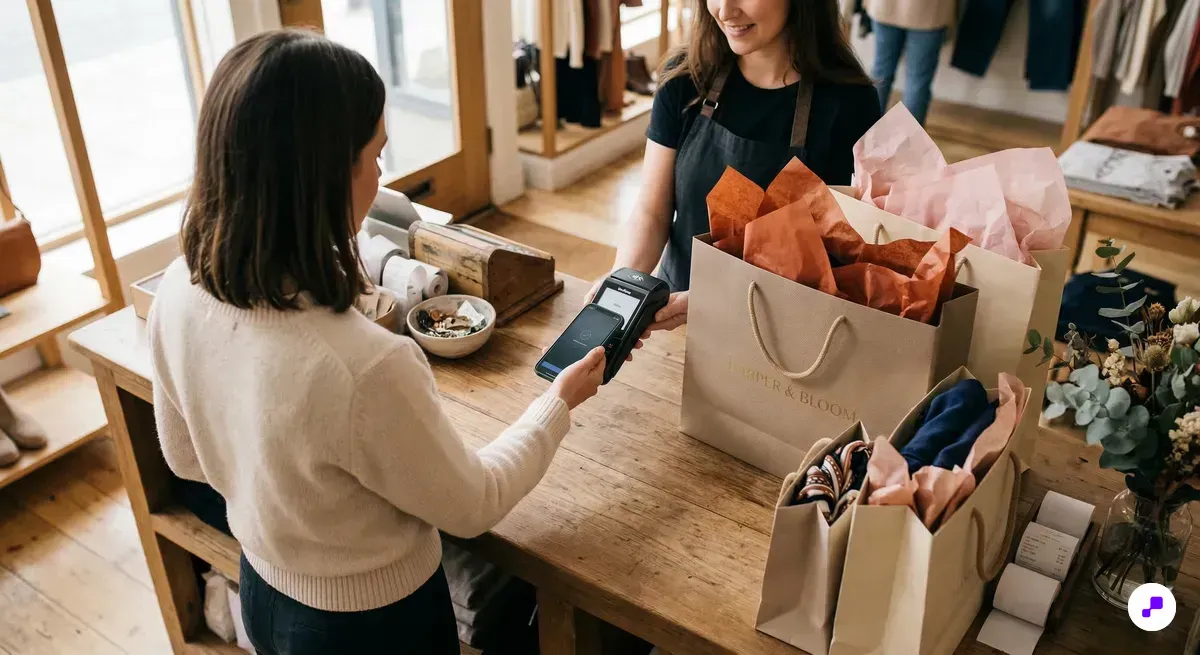
Fashion shopping has never been more fragmented. A single purchase journey might start with a TikTok video, continue with an in-store try-on, pause for a price comparison on mobile, and end with a desktop checkout three days later. If your loyalty program only captures the final step, you're rewarding less than half the relationship.
Single-channel loyalty programs create three specific problems for fashion brands. First, they penalize your most valuable customers. Omnichannel shoppers — those who engage with your brand across multiple touchpoints — spend significantly more than single-channel buyers. But a loyalty program that only tracks online purchases treats your $5,000-a-year omnichannel VIP the same as a $500 online-only shopper.
Second, they create frustrating disconnects. Imagine a customer who earns 500 points from online purchases, then visits your retail location and is told those points don't apply in-store. Or a pop-up shopper who can't access their loyalty rewards because the in-store system doesn't connect to the online program. These moments don't just lose a sale — they damage trust.
Third, they give you incomplete data. If you only see online purchases in your loyalty data, you're making decisions based on a partial picture. You might think a customer is lapsing when they've actually been buying regularly at your retail location. You might send a win-back email to someone who just spent $300 in-store yesterday. Incomplete data leads to irrelevant communications, which accelerate churn.
The solution is a unified loyalty profile that follows the customer across every channel. One points balance, one tier status, one reward wallet — accessible whether they're shopping on your website, tapping their phone at your POS, or clicking through from an Instagram ad. For ideas on structuring rewards that work everywhere, see our best rewards for fashion brands.
Single-channel loyalty programs penalize your most valuable customers, create frustrating disconnects, and give you incomplete data for decision-making.
List every channel where customers interact with your brand (website, POS, pop-ups, social, marketplace) and identify which ones currently connect to your loyalty program — the gaps are your priority.
Shopify's unified customer profiles already track purchases across online and POS channels — your loyalty app just needs to tap into this existing data layer.
The foundation of omnichannel loyalty is a single customer profile that captures every interaction — online purchases, in-store visits, social engagement, email clicks, and more. Without this unified profile, you're running multiple disconnected programs that happen to share a name.
Shopify makes this easier than most platforms because it already maintains unified customer records across your online store and POS locations. When a customer buys online and later purchases in-store using the same email or phone number, Shopify connects those transactions to one profile. Your loyalty program should sit on top of this unified data layer.
The technical key is consistent customer identification across channels. Online, this happens automatically through account login and checkout email capture. In-store, you need a quick identification method that doesn't slow down the checkout process. This is where digital wallet passes become essential — a tap of the phone at POS identifies the customer, pulls up their loyalty profile, and awards points in one motion. No email lookup, no phone number typing, no "Can you spell your last name?"
For pop-up events and temporary retail, wallet passes solve the biggest pain point: connecting pop-up sales to the customer's existing loyalty profile. Without a wallet pass, pop-up transactions often become orphaned data — sales that happened but never got linked to a customer profile. With a wallet pass, the customer taps their phone, and the transaction links to their unified profile automatically.
Social commerce is the newest channel to integrate. If you sell through Instagram Shopping or TikTok Shop, ensure those transactions flow back to Shopify and into the loyalty profile. Most loyalty apps can award points on any Shopify order regardless of the originating sales channel.
Data hygiene matters. Regularly merge duplicate profiles (customers who used different emails online vs. in-store), and set up rules to prevent new duplicates. A clean database means accurate tier calculations, correct points balances, and relevant communications. For more on connecting retail and online experiences, check our wallet pass guide for fashion brands.
A unified customer profile is the foundation of omnichannel loyalty — without it, you're running disconnected programs that frustrate customers and waste data.
Audit your Shopify customer database for duplicate profiles this week — merge any customers who appear under different emails for online and in-store purchases.
Shopify's unified customer records automatically merge online and POS transactions under one profile when the same email or phone number is used.
Digital wallet passes provide instant customer identification at POS — one tap links the transaction to the unified profile without manual lookups or data entry.
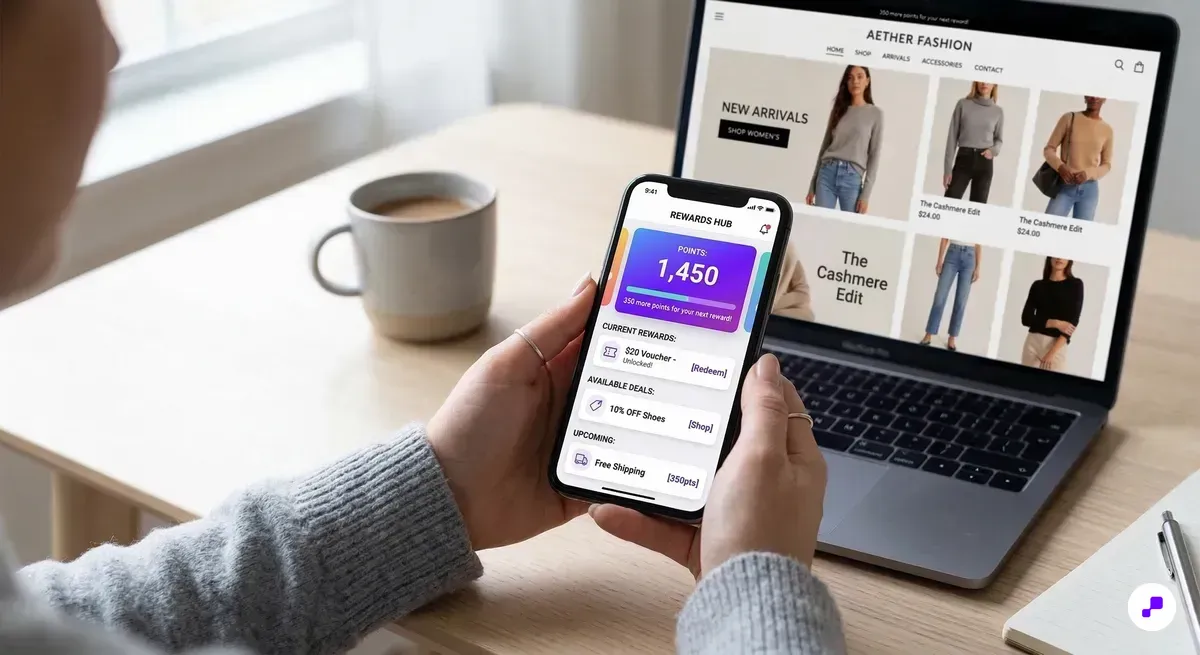
Your omnichannel reward structure needs to be simple enough that customers understand it instantly, regardless of which channel they're shopping in. If the rules change between online and in-store — different earning rates, different redemption options, different tier benefits — you'll create confusion and resentment.
Start with universal earning rules. The same point-per-dollar ratio should apply everywhere: website, POS, pop-up, social commerce. Customers shouldn't need to calculate whether it's "better" to buy online or in-store from a loyalty perspective. The simplicity of "1 point per dollar, everywhere" removes friction and encourages shopping wherever is most convenient.
Add channel-specific bonus opportunities without changing the base rules. Offer double points for in-store purchases during slow weekdays to drive foot traffic. Give bonus points for social commerce purchases to encourage channel adoption. Award extra points for buying online and picking up in-store (BOPIS) to drive cross-channel behavior. These bonuses guide behavior without complicating the core program.
Redemption must be universal too. A reward earned from online purchases should be redeemable in-store, and vice versa. This sounds obvious, but many fashion brands still have disconnected systems where online discount codes don't work at POS. Shopify's discount system can create codes that work across all channels — make sure your loyalty app generates these universal codes.
Tier qualification should aggregate all channels. A customer who spends $400 online and $300 in-store should qualify for the $700 tier threshold, not be treated as two separate $400 and $300 customers. This is where the unified customer profile pays off — your tier engine calculates status based on total spend across all touchpoints.
Consider channel-bridging rewards that specifically encourage omnichannel behavior. "Earn 100 bonus points on your first in-store purchase" nudges online shoppers into your retail locations. "Show your wallet pass in-store for a free styling session" drives digital adoption among retail-first customers. For inspiration on fashion-specific tier structures, see our VIP tiers for fashion brands guide.
Keep earning and redemption rules universal across all channels — simplicity builds trust, and channel-specific bonuses can guide behavior without adding complexity.
Test your loyalty redemption across every channel this week: earn points online, try to redeem in-store, and vice versa. Fix any disconnects before they frustrate real customers.
Shopify's discount codes can be configured to work across online and POS channels, ensuring loyalty rewards are redeemable everywhere without separate code systems.
If your fashion brand has retail locations — whether permanent stores, pop-ups, or trunk shows — Shopify POS is the bridge that connects physical shopping to your digital loyalty program. Without this bridge, in-store transactions become loyalty dead zones where customers earn nothing and your data picture remains incomplete.
The setup starts with ensuring every POS location is connected to your Shopify store and using the same loyalty app. When a customer checks out at POS, the system should automatically identify them (via wallet pass tap, email lookup, or phone number), award points, and apply any available rewards. The entire loyalty interaction should add less than 10 seconds to the checkout process — any longer, and your staff will skip it during busy periods.
Train your retail staff to lead with loyalty. The checkout conversation should naturally include: "Are you a loyalty member? You'll earn 85 points on this purchase — that's close to a free styling session." For non-members, the enrollment pitch should take 15 seconds: "Want to earn rewards on today's purchase? I'll text you a link to add our loyalty pass to your phone." Staff enthusiasm directly correlates with enrollment rates — train them on the benefits, not just the process.
Use POS-specific loyalty features to enhance the in-store experience. Display the customer's loyalty profile on the POS screen so staff can personalize the interaction: "Welcome back, Sarah — you're in our VIP tier, so you get early access to our new collection next week." This personal recognition turns a transaction into an experience that builds emotional loyalty.
Pop-up events deserve special attention because they're high-impact brand moments where loyalty enrollment should be a priority. Set up a dedicated enrollment station with a tablet displaying a QR code for wallet pass enrollment. Offer a launch-day bonus (double points or a small gift) to incentivize sign-ups. Pop-ups attract brand-curious shoppers who may never visit your website organically — capturing them into your loyalty program at the pop-up extends the relationship far beyond the event.
Track loyalty enrollment rates and participation by location. If one store has 80% loyalty participation at checkout and another has 30%, the difference is almost certainly staff behavior, not customer interest. Use location-level data to identify training opportunities. For a complete setup checklist, see our fashion loyalty checklist.
Shopify POS turns physical retail into a loyalty-earning channel, but staff training and frictionless identification are what make it work in practice.
Write a 30-second loyalty checkout script for your retail staff this week and role-play it with the team until it feels natural, not scripted.
Shopify POS displays customer loyalty profiles at checkout, enabling staff to personalize interactions and apply points and rewards in real time.
Wallet passes provide instant NFC identification at POS — customers tap their phone, the system pulls up their profile, and points are awarded without slowing checkout.
Digital wallet passes are the connective tissue of omnichannel fashion loyalty. While your backend systems handle the data unification, the wallet pass is what the customer actually experiences — a single, always-accessible loyalty identity that works everywhere they shop.
Think of the wallet pass as your customer's portable loyalty profile. It displays their points balance, current tier, and available rewards. It works as an identification method at POS (NFC tap). It delivers push notifications about new drops, points milestones, and exclusive offers. And it updates in real time after every transaction, regardless of channel. No other loyalty delivery method provides this combination of visibility, functionality, and convenience.
For fashion brands with both online and physical presence, wallet passes eliminate the most common omnichannel pain point: "How do I access my loyalty in-store?" Customers don't need to remember a login, download an app, or give their email to a cashier. They tap their phone — the same device they used to browse your website, scroll your Instagram, and read your emails. The loyalty experience feels continuous rather than channel-dependent.
Wallet passes also enable location-based engagement for fashion brands. When a customer with your wallet pass walks near your retail location, you can send a proximity notification: "You're near our Soho store — stop in today for double points and a complimentary styling session." This bridges the digital-physical gap in a way that feels helpful rather than intrusive.
The dynamic design capabilities of wallet passes create tier-driven brand moments. Entry-level members see a clean, simple pass design. As they tier up, the pass evolves — new colors, new graphics, new status labels. When a customer opens their wallet and sees their upgraded "VIP Gold" pass sitting next to their credit cards, it reinforces their status and connection to your brand multiple times a day.
Enrollment through wallet passes is channel-agnostic. Send the enrollment link via post-purchase email, embed it in your website header, print a QR code for in-store displays, or include it in your Instagram bio. However the customer discovers it, they tap once and the pass lives in their phone permanently. For details on how wallet passes work for fashion, see our wallet pass guide for fashion.
Wallet passes give customers a single, always-accessible loyalty identity that works across every channel — no app, no login, just a tap.
Design your wallet pass with tier-specific visual treatments and test how it looks in both Apple Wallet and Google Wallet before rolling it out to customers.
Wallet passes unify the loyalty experience across online, in-store, and social channels — one tap for identification, points, rewards, and real-time notifications.
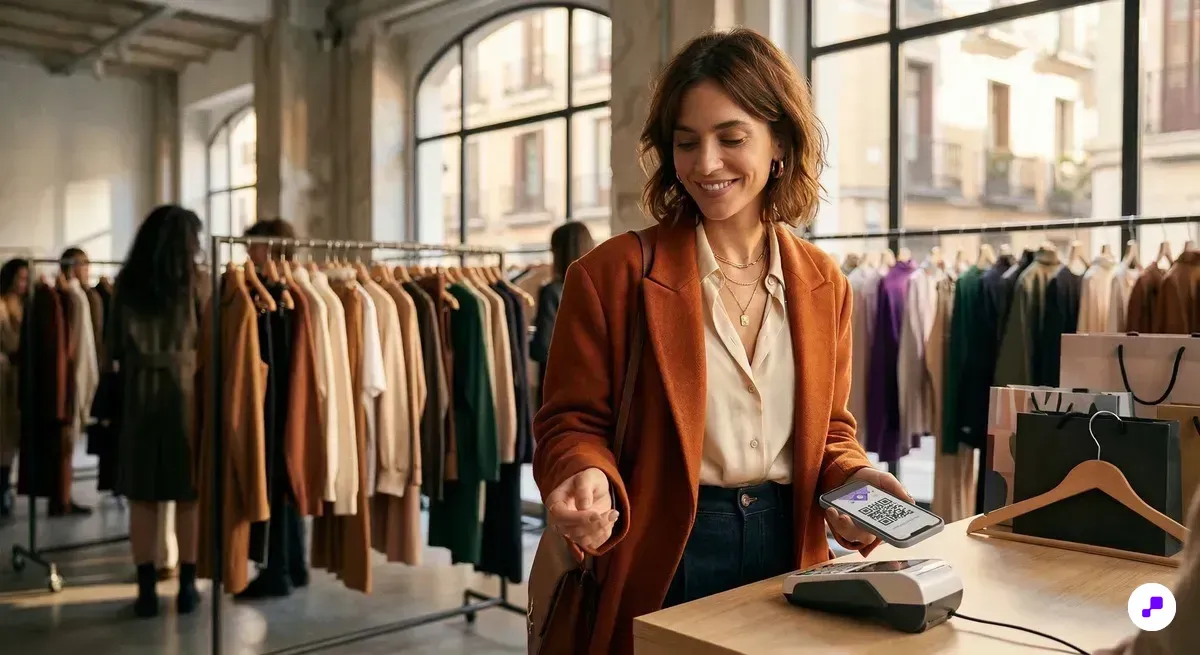
Measuring omnichannel loyalty requires looking beyond single-channel metrics. You need to understand how the loyalty program influences behavior across channels and whether the omnichannel experience is driving the cross-channel engagement you designed it for.
Start with cross-channel purchase rate: what percentage of your loyalty members shop in more than one channel? This is the core metric that validates your omnichannel strategy. If most members only shop online despite having a seamless in-store option, you need to work on channel-bridging incentives. A healthy target is 25-35% of loyalty members purchasing in at least two channels within 12 months.
Track channel-specific enrollment and participation rates. Where are customers joining your loyalty program (online vs. in-store vs. social)? Where are they earning the most points? Where are they redeeming rewards? This data reveals which channels are loyalty drivers and which have untapped potential. If 80% of enrollment happens online but only 20% of redemption happens there, your in-store team might be better at encouraging reward usage.
Measure the omnichannel lift: compare spending, visit frequency, and retention between single-channel and multi-channel loyalty members. Research consistently shows that omnichannel customers are more valuable, but you need to quantify this for your brand specifically. If omnichannel members spend 2x more and retain at 1.5x higher rates, that justifies continued investment in cross-channel integration.
Monitor wallet pass engagement as a proxy for omnichannel health. Pass views (how often customers look at their loyalty pass), notification open rates, and tap frequency at POS all indicate whether the omnichannel experience is active and valued. If pass engagement drops, the loyalty experience may be losing relevance.
Set up attribution for cross-channel journeys. When a customer receives a wallet push notification about a new collection and then buys in-store the next day, your analytics should connect those dots. Shopify's order data plus wallet pass notification logs give you the breadcrumb trail to understand how digital touchpoints drive physical purchases.
Review these metrics monthly and adjust your channel-bridging incentives based on what's working. If bonus points for in-store purchases are driving cross-channel adoption, double down. If location-based wallet notifications aren't generating visits, test different messaging or offers. Use the loyalty ROI calculator to model the impact of improved cross-channel engagement.
Cross-channel purchase rate is your north star omnichannel metric — track what percentage of loyalty members shop in more than one channel and work to grow it.
Pull your Shopify customer data this week and calculate the percentage of loyalty members who have purchased in both online and POS channels in the last 12 months.
Shopify's customer and order data, combined with POS transaction logs, let you build a complete picture of cross-channel loyalty behavior without third-party analytics tools.
An omnichannel loyalty program unifies your fashion brand's customer relationships across online, retail, pop-ups, and social commerce into one seamless experience. By building on Shopify's unified platform and using digital wallet passes as the customer-facing loyalty thread, you create a program that follows shoppers everywhere and rewards them consistently — driving higher spend, deeper engagement, and stronger retention.
JeriCommerce powers omnichannel loyalty for fashion brands — wallet passes that work at POS and online, unified points across every channel, and push notifications that bridge the digital-physical gap, all without requiring customers to download an app.
One wallet pass, one points balance, every touchpoint. online, in-store, and pop-up loyalty that follows your customer everywhere they shop.
Install Free on Shopify